
.png)




専門家のバイヤーズ・ガイド2025年、正しいスプリングロックワイヤーを選ぶための7つのポイント
9月 6, 2025
要旨
温室の構造的健全性は、その固定システムの有効性、とりわけ被覆材を固定するために用いられる方法と根本的に結びついています。本分析では、温室フィルムを構造体のフレームに固定する役割を果たす、一般に「ウィグルワイヤー」と呼ばれる部品であるスプリングロックワイヤーについて、包括的な検討を行います。 本稿では、最適なスプリングロックワイヤーシステムの選定を支える材料科学、工学原理、および経済的配慮について考察する。 本論考では、亜鉛メッキ鋼線やポリマー被覆線など、さまざまな材料構成を評価し、多様な環境的ストレス下におけるそれぞれの耐食性および耐久性を検証する。さらに、本調査では、ワイヤーとその対応する溝の幾何学的特性を検討し、ワイヤーの直径や溝の断面形状といった要因が、力の分布や温室用ポリエチレンフィルムの耐用年数にどのように影響するかを分析する。 本研究は、設置方法、メンテナンス要件、総所有コストといった実用的な側面にも及び、意思決定のための包括的な枠組みを提供する。南米の湿度から中東の極端な気温まで、特定の地域の気候条件に照らしてこれらの技術仕様を位置づけることで、本ガイドは、生産者や建設専門家が農業への投資を効果的に保護するための、きめ細やかなアプローチを提示している。
要点
- お住まいの地域の気候条件下で長期的な耐食性を確保できるよう、ワイヤーの材質と被覆を評価してください。
- ワイヤーの直径と引張強度は、お住まいの地域の一般的な風荷重および積雪荷重に合わせて選定してください。
- フィルムの摩耗を防ぎ、取り付けを容易にするロック式チャンネルプロファイルを選択してください。
- スプリングロックワイヤーの初期価格だけでなく、総所有コストも考慮してください。
- お選びになった温室用ポリエチレンフィルムやその他の被覆材と、システムが互換性があることを確認してください。
- 適切な取り付け方法は、部品自体の品質と同じくらい重要です。
- メンテナンスのしやすさや、将来的なフィルム交換時のワイヤーの再利用可能性も考慮に入れてください。
目次
- 温室の陰の立役者:スプリングロックワイヤー'の役割を理解する
- 要因1:材料の組成と保護コーティング
- 要因 2:線径、形状、および機械的強度
- 要因3:ロックチャネルの形状とその重要性
- 要素4:人的要素:設置、保守、および再利用性
- 要素5:温室の外壁との共生
- 要素6:多様な気候の世界:地域ごとのカスタマイズ
- 要素7:価格以上の価値:真の価値の算出
- よくある質問(FAQ)
- 結論
- 参考文献
温室の陰の立役者:スプリングロックワイヤー'の役割を理解する
温室という構造物は、その本質において、制御された野心の器である。それは、理想化された環境の小さな空間、すなわち光、温度、湿度を管理して生命を育むことのできる聖域を作り出そうとする試みである。 この聖域で最も目立つ要素は、その「皮膚」――すなわち、内部の栽培された世界と、外部の予測不可能な世界とを隔てる、広大な温室用ポリエチレンフィルムである。しかし、この皮膚の強度は、それを支えるシステムの強度に左右される。 壊滅的な破損は、フィルムの中央部分が破れることによるものはほとんどなく、その端が剥がれてしまうことが原因です。絶え間ない張力と応力が作用するこの領域に、スプリングロックワイヤーがあります。この部品は、その控えめな外観とは裏腹に、極めて重要な役割を果たしているのです。
そこに働く力を想像してみてください。強い突風はフィルムに均一な圧力をかけるわけではなく、揚力と圧力の複雑なパターンを生み出し、混沌としたリズムで引っ張ったり押したりします。 雨や雪は重量を加え、素材を引っ張ります。日中の日射による加熱と夜間の冷却という日々のサイクルにより、フィルムは膨張と収縮を繰り返します。金属製のチャンネルと、その中に収められた蛇行状のワイヤーで構成されるスプリングロックワイヤーシステムは、これらすべての力を確実に吸収し、分散させなければなりません。 それは、温室の構造を静かに守る守護者なのです。その機能は衣服の裾に例えることができます。しっかりとした縫い目がなければ、生地全体が端からほつれてしまう危険にさらされるのと同じです。
したがって、スプリングロックワイヤーの選定は、見過ごしてよい些細な問題ではありません。これは、構造物の耐久性、内部の作物の安全性、そして事業全体の経済的持続可能性に多大な影響を及ぼす、極めて重要な決定事項です。システムに不具合が生じれば、即座に甚大な損失を招く恐れがあります。 フィルムが破れると、デリケートな作物が突然の霜、灼熱の太陽、あるいは豪雨にさらされる恐れがあります。フィルムの交換費用は莫大ですが、失われた作物の価値はそれよりも桁違いに高くなる可能性があります。 したがって、スプリングロックワイヤーシステムの効果を左右する要因を深く理解することは、単なる学術的な演習にとどまらず、真剣に取り組む栽培者や温室建設業者にとって実践的な必要条件である。価格という表面的な評価にとどまらず、材料、設計、そして長期的な性能について、より慎重な評価を行う必要がある。
システムの構造:ワイヤとチャネル
具体的な選定要因について掘り下げる前に、まず構成要素について明確に把握しておきましょう。 このシステムは2つの部分で構成されています。1つ目はロック用チャンネルで、多くの場合、アルミニウムまたは亜鉛メッキ鋼製の「U」字型または「C」字型のプロファイルです。このチャンネルは、温室のフレーム(アーチ、ヒップボード、ベースボード)に直接取り付けられます。これにより、覆うべきエリアの周囲に沿って連続したレックが形成されます。
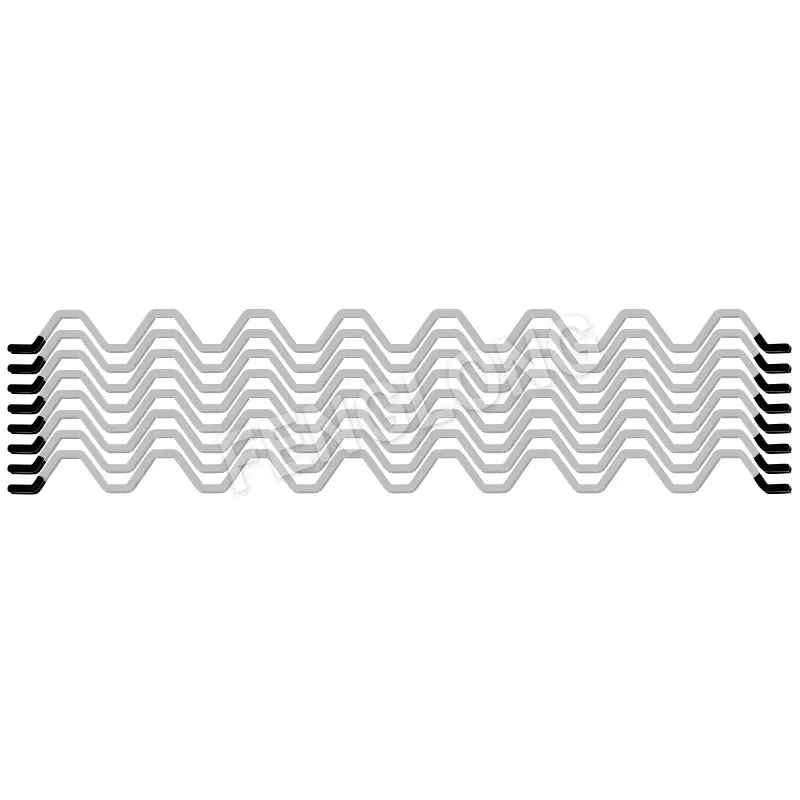
2つ目の構成要素は、スプリングロックワイヤーそのものです。これは、連続したジグザグ、つまり「ウィグル」パターンに曲げられた高張力鋼線です。この形状は恣意的なものではなく、バネとして機能するように設計されています。 このワイヤーを温室用フィルムの上の溝に押し込むと、ワイヤーは拡張しようとする力を生み出し、溝の壁に対して一定の外向きの圧力を加えます。これにより、温室用フィルムはワイヤーと溝の間にしっかりと固定されます。この連続的でバネ式の固定力こそが、このシステムの有効性を支えているのです。 圧力集中点が生じるネジやバテンを用いたシステムとは異なり、スプリングロックワイヤーは保持力をチャンネル全長にわたって均等に分散させるため、応力が集中する箇所でフィルムが破れるリスクを劇的に低減します。このシンプルでありながら独創的な仕組みについて、これからさらに詳しく見ていきましょう。
要因1:材料の組成と保護コーティング
スプリングロックワイヤーとその溝を構成する材料は、おそらくその寿命と信頼性を決定づける上で最も重要な要素である。これらの部品は、常に過酷な環境下に置かれている。強い紫外線(UV)や、雨や結露による絶え間ない湿気、そして多くの農業現場では、肥料や農薬に含まれる腐食性化学物質にさらされている。 材料の選択は、システムがこうした過酷な環境にどれだけ耐えられるかを決定づけるものです。材料に関する議論は、主に母材、そしてそれ以上に、母材を外部環境から保護する保護層を中心に展開されます。
これらのワイヤーの製造は、精密金属加工の一分野であり、材料の選定は、その部品が想定される使用環境において最終的にどのような性能を発揮するかを決定づける基礎的な工程である(Zigoal, 2025)。ここでは、主な候補について検討してみよう。
鉄鋼の基準:亜鉛メッキの理解
スプリングロックワイヤーの大部分は、高張力鋼で作られています。鋼は、ワイヤーが正しく機能するために必要な強度と弾力性を理想的に兼ね備えています。しかし、未加工の鋼は錆(酸化鉄)が生じやすく、この化学反応によって金属が劣化し、構造的強度が損なわれてしまいます。これを防ぐため、鋼にはコーティングが施されます。 最も一般的な方法は、亜鉛メッキです。
亜鉛メッキとは、鋼に亜鉛の保護層を形成する処理のことです。鋼線を溶融した亜鉛の浴に浸す様子を想像してみてください。亜鉛は鋼と冶金学的結合を形成し、耐久性が高く、耐摩耗性に優れた被膜を作り出します。亜鉛メッキの素晴らしさは、「犠牲防食」と呼ばれる原理にあります。 亜鉛は鉄よりも電気化学的に活性が高い物質です。亜鉛被膜に傷や小さな亀裂が生じ、その下の鋼が湿気や酸素にさらされると、周囲の亜鉛が優先的に腐食します。つまり、亜鉛は自らを犠牲にして鋼を保護するのです。これは、傷がつくとすぐにその部分が錆の発生源になってしまう塗料のような単純なバリアコーティングとは根本的に異なります。 したがって、高品質な亜鉛メッキ加工されたスプリングロックワイヤーは、その「鎧」に生じた小さな損傷を「修復」することができ、耐用年数を大幅に延ばすことができます。この亜鉛コーティングの厚さ(通常は1平方メートルあたりのグラム数で測定される)は、その潜在的な耐久性を示す直接的な指標となります。
「ポリマーシールド」:PVCコーティングの進歩
別の、そして多くの場合より優れた保護方法として、亜鉛メッキ鋼線をポリマー(通常はポリ塩化ビニル(PVC))の層で被覆する方法があります。この手法は二重の防御効果をもたらします。まず、下地の鋼材に亜鉛メッキを施し、その固有の犠牲防食効果を発揮させます。 次に、紫外線安定化処理を施したPVCの厚い層を、そのワイヤーの上に押し出し成形します。
このプラスチックコーティングは、強固で不活性なバリアとして機能します。湿気を完全に遮断し、単純な亜鉛コーティングの劣化を早める可能性のある多くの農薬の酸性やアルカリ性に対しても極めて高い耐性を示します。PVC層は、鎧のベース層の上に羽織った完全なレインコートのようなものだと考えてください。 PVC被覆スプリングロックワイヤーには、見過ごされがちなさらなる利点があり、それは温室用フィルム自体に関係しています。PVCの柔らかく滑らかな表面は、むき出しの金属に比べて温室用ポリエチレンフィルムへの負担がはるかに少ないのです。長年にわたる膨張、収縮、そして風による振動により、金属ワイヤーは接触している部分のフィルムを徐々に摩耗させてしまう可能性があります。 PVC被覆ワイヤーはこのリスクを軽減し、摩擦と摩耗を抑えることで、保護対象である被覆材の寿命を延ばします。PVC被覆スプリングロックワイヤーの初期投資は高くなりますが、ワイヤーとフィルムの両方の寿命が延びるため、長期的にはより経済的な選択肢となる場合が多いのです。
チャネルの材質:鋼対アルミニウム
スプリングロックワイヤーを収容するロック用チャンネルは、通常、亜鉛メッキ鋼またはアルミニウムで製造されます。亜鉛メッキ鋼製のチャンネルは優れた強度を備えており、高い構造荷重がかかる箇所ではしばしば優先的に採用されます。その主な欠点は重量と、特に切断面やドリル穴において、長年にわたり(程度は低いものの)腐食のリスクが継続することです。
一方、アルミニウム製のチャンネルは、魅力的な代替案となります。アルミニウムは空気に触れると自然に不動態の保護酸化膜を形成するため、本質的に耐食性に優れています。鋼のように錆びることはありません。このため、南米や東南アジアの多くの地域に見られるような高湿度環境において、アルミニウムは優れた選択肢となります。 また、アルミニウムは鋼鉄よりも大幅に軽量であるため、特に頭上での作業や大規模な構造物での作業において、設置作業を簡素化することができます。 主なトレードオフとしては、アルミニウムは鋼鉄よりも柔らかい金属であるため、強い衝撃を受けると変形しやすくなる点が挙げられます。チャンネルを選定する際には、アルミニウムの優れた耐食性と軽量性を、亜鉛メッキ鋼の強度と低コストと天秤にかける必要があります。
| 特徴 | 亜鉛メッキ鋼線 | PVC被覆鋼線 | アルミニウム・チャンネル | 亜鉛めっきスチールチャンネル |
|---|---|---|---|---|
| 耐食性 | グッド | 素晴らしい | 素晴らしい | グッド |
| フィルム摩耗 | 中程度のリスク | リスクが極めて低い | 低リスク | 中程度のリスク |
| 耐薬品性 | フェア | 素晴らしい | グッド | フェア |
| 寿命 | 5~10年 | 10~20年以上 | 20年以上 | 10~15年 |
| 初期費用 | 低い | 高い | 高い | 中程度 |
| 最適 | 乾燥した気候、低予算のプロジェクト | 湿潤地域・沿岸地域、長期投資 | 高湿度地域、設置の容易さ | 高い強度が求められる案件、予算重視のプロジェクト |
要因 2:線径、形状、および機械的強度
スプリングロックワイヤーの性能を決定づけるのは、その素材だけでなく、形状や固有の強度です。これらは恣意的な設計上の選択ではなく、保持力、使いやすさ、耐久性のバランスを図るために、綿密な工学計算を経て導き出された結果なのです。 機械的強度とは、荷重がかかった際に変形に耐え、長年にわたり破損することなくばね力を発揮し続けるワイヤーの能力を指します。
直径の問題
スプリングロックワイヤーには、通常1.8mmから2.5mmまでのさまざまな直径のものが用意されています。「太いほど良い」というのは直感的に思えるかもしれませんが、実際にはもう少し複雑な事情があります。もちろん、太いワイヤーほど、引張破壊強度(ワイヤーを引きちぎるのに必要な力)の点では強度が高くなります。 しかし、太いワイヤーは剛性も高くなります。この剛性の増加により、取り付けが難しくなり、ワイヤーを溝に押し込むのにより大きな力が必要となります。単独作業の場合や、寒冷地で材料の柔軟性が低下している状況では、これは実用上、大きな課題となり得ます。
最適な直径は、予想される荷重によって決まります。小規模な趣味用の温室や、風速が非常に低い地域では、2.0mmのワイヤーで十分かもしれません。 強風や積雪の多い地域にある、大規模で多スパン構造の商業用温室の場合、2.3mmまたは2.4mmのスプリングロックワイヤーを使用することで、より大きな安全マージンを確保できます。 太いワイヤーは「剛性」が高いため、フィルムを溝にしっかりと押し込み、風による強力な浮き上がり力に対してもより確実な保持力を発揮します。この選択は、太いワイヤーがもたらす安全性と、細いワイヤーがもたらす設置の容易さとの間のトレードオフとなります。
ジグザグの形とその機能
The characteristic "wiggle" or "zigzag" form of the wire is the key to its function weldingweb.com). This form is created by bending the wire around a jig or mandrel during manufacturing (Zigoal, 2025). Each bend acts like a small leaf spring. When the wire is inserted into the locking channel, the bends are slightly compressed. According to Hooke's Law of elasticity, the force exerted by a spring is proportional to its displacement. By compressing the wire, we are loading it with potential energy, which it then releases as a constant outward force against the walls of the channel.
The quality of a spring lock wire can be judged by the consistency of this form. A well-manufactured wire will have uniform bends with a consistent angle and length. This uniformity ensures that the holding pressure is applied evenly along the entire length of the channel. In contrast, a poorly made wire with irregular bends will create areas of high and low pressure, which can lead to film slippage or create stress points. Furthermore, the wire must be made from a specific grade of high-tensile, high-carbon steel that possesses "spring memory." This means that after being installed and held in a compressed state for years, it will still spring back to its original shape when removed. This property is absolutely vital for the reusability of the wire, allowing growers to replace their greenhouse film every few years without needing to purchase a completely new fastening system. A cheap wire made from low-grade steel will become permanently deformed and lose its springiness, rendering it useless after a single application.
Tensile Strength and Fatigue Life
Tensile strength is a measure of the maximum stress a material can withstand while being stretched or pulled before breaking. For a spring lock wire, this is important, but perhaps even more important is its fatigue life. Fatigue failure is a phenomenon where a material breaks after being subjected to repeated cycles of loading and unloading, even if the load is well below the material's ultimate tensile strength.
Think of bending a paperclip back and forth. It doesn't break on the first bend, but after repeated cycles, it weakens and snaps. A spring lock wire in a windy location is subjected to thousands of such cycles. The wind causes the film to flutter and vibrate, which translates into minute movements and stress cycles on the wire. A high-quality spring lock wire is manufactured from steel that has been heat-treated and processed to maximize its fatigue life, ensuring it can withstand this constant vibration for a decade or more without becoming brittle and failing. When evaluating a spring lock wire, one is not just buying a piece of bent metal; one is investing in a carefully engineered component designed to endure a long and stressful life.
要因3:ロックチャネルの形状とその重要性
The spring lock wire is only one half of the fastening equation. Its performance is inextricably linked to the design and quality of the locking channel (often called a U-channel, C-channel, or base) into which it fits. A superior wire placed in a poorly designed channel will yield a suboptimal result. The channel is the foundation of the system, the immovable object against which the wire's irresistible force is applied. Its profile, material, and features warrant careful consideration.
The channel serves as the structural anchor for the entire covering system. It must be securely fastened to the greenhouse frame, providing a rigid and continuous track. The interaction between the wire and the channel is where the magic happens, and the details of the channel's design can make the difference between a secure, long-lasting seal and a recurring maintenance headache.
シングル・チャンネル設計とダブル・チャンネル設計
Locking channels are available in two primary configurations: single and double. A single channel, as the name suggests, has one groove designed to accept one spring lock wire. This is the most common and widely used profile, suitable for securing the edges of a single layer of film or for most standard applications.
A double channel features two parallel grooves within a single extruded piece of metal. This ingenious design offers remarkable versatility. For instance, in climates with cold winters and hot summers, a double channel allows for the installation of two layers of greenhouse polyethylene film. Inflating the space between these two layers with a small blower fan creates an insulating air pocket, dramatically reducing heat loss in the winter. The double channel allows both layers to be secured tightly in the same base. Alternatively, a grower could use one channel to secure the main polyethylene film and the second to install a shade cloth during the hottest months or an insect net for pest control. This can be done without disturbing the main covering. A double channel provides future-proofing and adaptability, allowing the greenhouse's covering system to be modified with the changing seasons or evolving cultivation strategies. While more expensive upfront, its versatility can offer significant long-term value.
The Importance of Smooth Edges and Interior Finish
Let's return to the analogy of the wire and film interface. The greenhouse film is under constant tension. Any sharp edge or abrasive surface within the locking channel presents a threat. When wind causes the film to vibrate, it will rub against the interior surfaces of the channel. If those surfaces are rough or have sharp corners from the manufacturing process, they will act like a file, slowly sawing through the film.
A high-quality locking channel, whether aluminum or steel, will have smooth, rounded interior edges. This is a subtle but profoundly important design feature. The rounded profile allows the film to be pressed into the channel without being creased or cut. It provides a gentle curve for the film to follow, distributing the stress over a wider area. When inspecting a channel, run your finger along the inside edges. A well-made channel will feel smooth and finished, while a cheaper one may have burrs or sharp angles. This small detail is a reliable indicator of manufacturing quality and a predictor of how well the channel will preserve the life of your film.
Pre-Drilled vs. Un-Drilled Channels
Locking channels can be purchased either pre-drilled with mounting holes or as solid, un-drilled lengths. Pre-drilled channels offer convenience and can speed up installation. The holes are spaced at a standard interval, ensuring a consistent and secure attachment to the greenhouse frame. This can reduce labor time and eliminate the need for measuring and drilling on-site.
However, un-drilled channels offer greater flexibility. Greenhouse frames can have non-standard spacing, or there may be specific structural members where a fastener is required that doesn't align with the pre-drilled pattern. Un-drilled channels allow the installer to place holes precisely where they are needed, ensuring the most secure possible attachment to their specific frame. This is particularly useful for retrofitting older greenhouses or for custom-built structures. The choice between pre-drilled and un-drilled often comes down to a balance between the speed of a standardized installation and the precision of a custom fit.
要素4:人的要素:設置、保守、および再利用性
A perfectly engineered spring lock wire system can still fail if it is installed improperly. The human element—the skill and technique of the installer—is a vital part of the process. A good system should not only be strong but also reasonably easy to install correctly. Its design should guide the installer toward a successful outcome. Likewise, its long-term value is enhanced if it simplifies maintenance and allows for the easy replacement of the film.
The Art of Installation
The process of installing a spring lock wire involves a specific technique. First, the greenhouse polyethylene film is draped over the locking channel with some slack. The end of the spring lock wire is then hooked into one end of the channel. The installer then works their way down the channel, "wiggling" the wire back and forth while applying downward pressure. This wiggling motion helps to feed the wire into the channel without needing to apply brute force, which could damage the film.
A well-designed system facilitates this process. The wire should have just the right amount of springiness—stiff enough to hold securely but flexible enough to be worked into the channel without excessive effort. The channel's opening should be slightly wider than the wire, with tapered lead-in edges that help guide the wire into place. The goal is to seat the wire fully within the channel, creating a uniform "hump" of film. There should be no loose or baggy spots. It is also important not to stretch the film too tightly before installing the wire. The system is designed to allow for some movement and for the final tensioning to be done later, for example, by a フィルムリーラー if one is used on the roll-up sides.
A System Designed for Reusability
One of the most significant economic advantages of a high-quality spring lock wire system is its reusability. Greenhouse polyethylene film typically has a lifespan of 3 to 5 years, after which it must be replaced due to UV degradation. A superior spring lock wire, especially a PVC-coated one, can last for 10, 15, or even 20 years. This means it can be used for two, three, or even four cycles of film replacement.
To remove the old film, a special extraction tool can be used, or one can simply work the wire out by hand in the reverse of the installation process. A wire with good spring memory will return to its original shape and be ready for the new film. A cheap wire, by contrast, may become permanently deformed, losing its ability to provide adequate pressure. It becomes a single-use product. The initial savings from buying a cheaper wire are quickly erased when the entire system must be replaced with every film change. Investing in a durable, reusable spring lock wire and channel from a reputable supplier like the ones found when you explore our complete range of products is a clear-headed economic decision.
Maintenance and Inspection
While a spring lock wire system is largely a "set it and forget it" component, periodic inspection is a prudent practice, especially after a major storm. A walk around the greenhouse to visually inspect the channels is time well spent. Check to see that the wire is still fully seated in the channel along its entire length. Look for any areas where the film may appear to be slipping. On a double-channel system, ensure that debris has not collected in the unused channel, as this can hold moisture and accelerate corrosion. A quick check allows for small issues to be addressed before they become large ones. For example, a small section of wire that has popped out can be quickly reseated, preventing a larger section from pulling loose in the next high wind. This minimal but regular attention ensures the system continues to perform its protective function year after year.
要素5:温室の外壁との共生
The spring lock wire system does not exist in a vacuum. Its primary purpose is to hold the greenhouse covering, and its design must be harmonious with the properties of that covering. The most common covering is a specialized greenhouse polyethylene film, but the system may also be used to secure shade cloths, insect nets, or blackout materials. A successful fastening system treats this "skin" with mechanical empathy, securing it firmly without causing damage. The relationship is symbiotic; the wire protects the film, and the film, in turn, allows the greenhouse to function.
The entire environment within the structure, managed by components like the ventilation system and circulation fan, depends on the integrity of this seal. A breach compromises everything.
The Threat of Stress Concentration
Imagine trying to push your finger through a stretched rubber sheet. It's difficult. Now, imagine pushing a needle with the same amount of force. It pierces the sheet easily. This illustrates the principle of stress concentration. The needle concentrates all the force onto a tiny point, exceeding the material's strength.
Traditional fastening methods, such as using wooden battens and screws, create points of high stress. The film is tightly pinched under the screw head but is looser in the spaces between screws. Wind-induced flutter will focus stress at these pinch points, making them the most likely places for a tear to begin.
The genius of the spring lock wire system is its ability to almost completely eliminate stress concentration. It provides a continuous, distributed grip along the entire length of the channel. The force is spread out over a large area, meaning no single point on the film is subjected to excessive strain. This is why a spring lock wire is so much gentler on the greenhouse polyethylene film and so much more effective at preventing wind damage. The smooth, serpentine curve of the wire ensures there are no sharp angles or points to initiate a tear.
Compatibility with Different Materials
While greenhouse polyethylene film is the most common partner for a spring lock wire, the system is versatile enough for other materials. Shade cloths, which are woven or knitted fabrics, can be easily secured. The wire's continuous pressure is effective at holding the fabric without unraveling the weave. The same applies to fine-mesh insect nets.
A key consideration here is the thickness of the material. A standard spring lock wire and channel are designed for one or two layers of typical 6-mil (150-micron) film. If one intends to secure a very thick material, like a heavy-duty blackout tarp or multiple layers of insulation blankets, it is important to verify the system's capacity. Some manufacturers offer wider channels or specialized wires designed for thicker material stacks. Trying to force too much material into a standard channel can prevent the spring lock wire from seating properly, resulting in a weak grip. It is always best to match the system to the specific covering materials being used.
The Role of the Ventilation System
The integrity of the film's seal is directly related to the proper functioning of the greenhouse's climate control systems. A ventilation system, whether it relies on passive roof vents or active exhaust fans, creates pressure differentials. For example, a powerful circulation fan or a ventilation system on the leeward side of the building creates negative pressure inside the greenhouse, which pulls the film inward. If the spring lock wire seal is weak, this suction can cause the film to pull out of the channel.
Conversely, proper ventilation can reduce the stress on the structure. In a high-wind event, opening the vents on the leeward side can help to equalize the pressure between the inside and outside of the greenhouse, reducing the violent lifting forces on the roof. The automatic control of such vents is often managed by a gear motor, which must work in concert with a structure whose covering is securely fastened. A robust spring lock wire system ensures that the greenhouse polyethylene film remains taut and in place, allowing the ventilation system and its associated gear motor and circulation fan components to function as designed without compromising the structure's envelope.
要素6:多様な気候の世界:地域ごとのカスタマイズ
A greenhouse in the frosty plains near Moscow faces a profoundly different set of environmental challenges than one in the humid heat of the Amazon basin or the sun-scorched deserts of the Middle East. A one-size-fits-all approach to component selection is a recipe for failure. The choice of a spring lock wire system must be informed by a deep understanding of the local climate. This is where a global supplier with regional expertise demonstrates its value, offering solutions tailored to the specific pressures of a given environment. Our commitment to quality is rooted in understanding these diverse global needs.
High Humidity and Rain: The Challenge for South America and Southeast Asia
In tropical and subtropical regions, such as much of South America and Southeast Asia, the primary adversary is not cold, but relentless humidity and heavy rainfall. In this environment, corrosion is a constant and aggressive threat. For these markets, a standard galvanized spring lock wire may have a significantly reduced lifespan. The constant presence of moisture will relentlessly seek out any imperfection in the zinc coating.
Here, a PVC-coated spring lock wire becomes the clear choice. The impermeable polymer layer provides a robust defense against moisture. Paired with an aluminum locking channel, which is inherently rust-proof, this combination creates a fastening system that is exceptionally well-suited to wet, humid conditions. The investment in this superior level of corrosion protection pays for itself by preventing premature failure and the need for frequent replacement.
Snow Load and Extreme Cold: The Russian Federation and Northern Climates
In Russia and other northern climates, the defining challenge is the weight of accumulated snow and the effect of extreme cold on materials. Snow load is not a dynamic force like wind; it is a massive, static weight that presses down on the entire structure. The spring lock wire system must hold the greenhouse polyethylene film securely enough that it does not sag and tear under this immense burden.
For these conditions, strength is paramount. A thicker wire diameter (e.g., 2.3mm or 2.4mm) is recommended to provide maximum holding power. A galvanized steel locking channel is often preferred over aluminum for its superior structural rigidity and strength, which helps to support the film against the snow's weight. Furthermore, materials can become brittle in extreme cold. A high-quality spring lock wire is made from steel that retains its ductility and springiness even at sub-zero temperatures, while a lower-quality wire might become brittle and fracture.
Intense UV and Heat: The Middle East and South Africa
In the arid and sun-drenched climates of the Middle East and parts of South Africa, the greatest enemy is the sun itself. The intense ultraviolet radiation relentlessly attacks both the greenhouse polyethylene film and any exposed plastic components. The extreme heat also causes significant thermal expansion and contraction of all materials.
For these regions, the UV stability of the components is a top consideration. A PVC-coated spring lock wire must use a polymer formulation that is heavily stabilized with UV inhibitors. A low-quality PVC will quickly become brittle, crack, and peel away from the wire, exposing it to the elements. The spring lock wire must also hold the film securely through the daily cycle of expansion and contraction. As the film heats up it expands and can become slack; as it cools at night it shrinks and becomes taut. The constant spring pressure of the wire is essential to keep the film secure through these cycles without over-stressing it when it is cold and tight.
| Region | Primary Challenge(s) | Recommended Spring Lock Wire | 推奨チャンネル | Key Consideration |
|---|---|---|---|---|
| South America | 高湿度、豪雨 | PVC-Coated Steel | アルミニウム | Maximum corrosion resistance is the priority. |
| Russia | Heavy snow load, extreme cold | Thicker Diameter (≥2.3mm) Steel | 亜鉛メッキスチール | Prioritize structural strength and material performance at low temperatures. |
| Southeast Asia | High humidity, high winds (typhoons) | PVC-Coated Steel | Aluminum or Heavy-Gauge Steel | Balance of corrosion resistance and high wind load capacity. |
| Middle East | Intense UV radiation, high heat | High-Grade UV-Stabilized PVC-Coated | Aluminum (for heat dissipation) | UV stability of the coating is paramount; must handle thermal cycling. |
| South Africa | Diverse (UV, wind, hail) | PVC-Coated Steel | 亜鉛メッキスチールまたはアルミニウム | A versatile, durable system is needed to handle a mix of conditions. |
要素7:価格以上の価値:真の価値の算出
In any business, the temptation to minimize upfront costs is strong. When presented with two options for a component like a spring lock wire, it is natural to gravitate toward the one with the lower price tag. This, however, is a classic example of a false economy. The true cost of a component is not its purchase price, but its Total Cost of Ownership (TCO) over the lifespan of the greenhouse. A thoughtful analysis of TCO reveals that investing in a higher-quality spring lock wire system is almost always the more profitable decision.
The Components of Total Cost of Ownership
The purchase price is just one piece of the puzzle. A comprehensive calculation of TCO for a spring lock wire system must include several other variables:
-
Lifespan and Replacement Costs: A cheaper, lower-quality wire might last only 3-5 years, meaning it must be replaced with every film change. A high-quality, PVC-coated wire might last 15 years. Let's imagine a scenario: a cheap system costs $500, and a quality system costs $800. Over 15 years, the cheap system will need to be purchased three times (at year 0, year 5, and year 10), for a total component cost of $1500. The quality system is purchased once for $800.
-
Labor Costs: Replacing the spring lock wire and channel is a labor-intensive process. Each time the system is replaced, you incur significant labor costs. If the labor to replace the system is $400, then over 15 years, the cheap system incurs $1200 in replacement labor costs, while the quality system incurs none (as only the film is replaced).
-
Associated Material Damage: A lower-quality wire is more likely to abrade or tear the greenhouse polyethylene film, potentially shortening the film's lifespan and forcing a premature replacement. The cost of a new roll of film can be substantial.
-
Risk of Catastrophic Failure: This is the most significant and most difficult-to-quantify cost. What is the value of an entire crop of tomatoes a week before harvest? A fastening system that fails during a single windstorm can lead to a total loss of the crop. A higher-quality spring lock wire system is an insurance policy against this risk. The small additional upfront cost is negligible compared to the potential for devastating financial loss.
An Investment in Peace of Mind
By choosing a robust, reliable spring lock wire system from a supplier known for high-quality greenhouse components, a grower is doing more than just buying metal; they are buying security and peace of mind. They are reducing the risk to their investment and their livelihood. They can have confidence that their structure is fortified against the elements, allowing them to focus on what they do best: cultivating their crops.
The calculation is clear. The slightly higher initial outlay for a system featuring a reusable, PVC-coated, high-tensile spring lock wire and a durable, well-designed locking channel is repaid many times over through reduced replacement costs, lower labor expenses, and, most importantly, a drastically lower risk of costly, crop-destroying failure. The smart investment is not the cheapest one, but the one that delivers the greatest value and security over the long term.
よくある質問(FAQ)
1. What is the main advantage of a spring lock wire system over using battens and screws? The primary advantage lies in the distribution of force. A spring lock wire provides continuous, even pressure along the entire length of the film, eliminating the stress concentration points created by screws. This dramatically reduces the risk of the film tearing under wind load and is gentler on the material, extending its life.
2. How many layers of film can I install with one spring lock wire? A standard spring lock wire and channel are typically designed to securely hold one or two layers of 6-mil (150-micron) greenhouse polyethylene film. If you need to install more layers or a thicker material, you should look for specialized wider channels and corresponding wires designed for that purpose.
3. Is a PVC-coated spring lock wire really worth the extra cost? In most environments, yes. The PVC coating provides a superior barrier against moisture and agricultural chemicals, significantly extending the wire's lifespan. It also creates a smoother, less abrasive surface that protects your greenhouse film from wear and tear. The long-term value from reusability and reduced film damage typically outweighs the higher initial price.
4. Can I reuse my spring lock wire when I change my greenhouse film? Yes, if you have purchased a high-quality wire. A good spring lock wire is made from high-tensile steel with "spring memory," meaning it will return to its original shape after being removed. This allows it to be reused for multiple film replacement cycles, offering significant cost savings over time. Cheaper wires may deform permanently and will need to be replaced.
5. How tight should I pull the film before installing the spring lock wire? The film should be snug but not stretched drum-tight. The spring lock wire system is designed to hold the film securely while still allowing for minor movements from thermal expansion and contraction. Pull the film just enough to remove the major wrinkles and slack, then let the wire system do the work of holding it in place.
6. What is the difference between a spring lock wire and a wiggle wire? There is no difference. "Spring lock wire," "wiggle wire," and "zigzag wire" are all interchangeable names for the same product: a bent, high-tensile wire used in a channel to fasten greenhouse coverings. The name simply describes either its function (spring lock) or its shape (wiggle, zigzag).
7. Do I need special tools to install spring lock wire? No special tools are required for installation. The wire is designed to be installed by hand using a "wiggling" motion to seat it into the channel. While not necessary, some installers find that wearing gloves can improve their grip and comfort. For removal, a simple tool like a flat-head screwdriver can be used to pry the end of the wire out of the channel.
結論
The selection of a spring lock wire system, a decision that may seem minor in the grand scheme of constructing a greenhouse, is in fact a choice of fundamental importance. It is a decision that speaks directly to the structure's resilience, its ability to withstand the forces of nature, and its capacity to protect the valuable crops it houses. We have journeyed through the intricate details of material science, examining the protective qualities of galvanization and PVC coatings. We have explored the physics of wire diameter and form, understanding how these geometric properties translate into holding power. We have seen that the locking channel is an equal partner in this system, and that its design is paramount for preventing film damage.
This examination reveals that a discerning approach is necessary. One must look past the superficial allure of a low price and instead consider the deeper truths of long-term value, total cost of ownership, and risk mitigation. The synergy between the fastening system and the greenhouse skin, the harmonious operation with the ventilation system and circulation fan, and the adaptation to specific regional climates are all part of a complex, interconnected web. A high-quality spring lock wire is not an expense; it is an investment in durability, an insurance policy against catastrophe, and a testament to a professional, forward-thinking approach to controlled environment agriculture. By making an informed choice, growers and builders can ensure their greenhouse stands not as a fragile bubble, but as a robust and enduring sanctuary for growth.
参考文献
Farthingales Corset Making Supplies. (n.d.). Zig zag wires – Wiggle bones. Retrieved January 1, 2025, from
Welding Web. (2023). Zigzag Wire (wave wire, wiggle wire). Retrieved January 1, 2025, from (波・ワイヤー・揺れ・ワイヤー)
Zigoal. (2025). What are wire forms. Retrieved January 1, 2025, from