
Expert Guide to Greenhouse Lock Channel and Spring Wire: 7 Steps for a Weatherproof Seal in 2026
January 5, 2026
Abstract
The structural integrity and environmental stability of a modern greenhouse depend significantly on the efficacy of its covering attachment system. This document provides a comprehensive examination of the greenhouse lock channel and spring wire system, a critical technology for fastening polyethylene films and other coverings to a greenhouse frame. It explores the underlying mechanical principles of tension and friction that enable this system to create a continuous, secure seal against environmental pressures like wind and precipitation. An in-depth analysis of material selection, including aluminum versus galvanized steel for channels and PVC-coated versus bare steel for spring wires, is presented, with special consideration for performance in diverse global climates such as those found in South America, Russia, and the Middle East. The text details a systematic, seven-step process for installation, from frame preparation to post-installation inspection, and outlines best practices for long-term maintenance. The objective is to provide growers, both professional and enthusiast, with the deep, nuanced understanding required to select, install, and maintain a durable and effective greenhouse lock channel and spring wire system, thereby safeguarding their agricultural investments.
Key Takeaways
- Choose materials based on your climate; aluminum channels and PVC-coated wires resist corrosion in humid regions.
- Properly prepare the greenhouse frame by cleaning it and ensuring it is structurally sound before installation.
- Install the lock channel with fasteners spaced correctly to distribute load and prevent film tearing.
- Achieve a taut but not overstretched film placement to allow for thermal expansion and contraction.
- Use a continuous "wiggling" motion to insert the spring wire for a uniform, secure grip.
- Regularly inspect the greenhouse lock channel and spring wire system for signs of wear or damage.
- When reinstalling, avoid using the same screw holes to maintain the frame's structural integrity.
Table of Contents
- The Foundational Principle: Understanding the Mechanics of a Secure Seal
- Step 1: Deliberating on Materials for Your Greenhouse Lock Channel and Spring Wire
- Step 2: Preparing the Greenhouse Frame for Installation
- Step 3: The Precise Art of Installing the Lock Channel
- Step 4: Laying and Positioning the Greenhouse Covering
- Step 5: Mastering the "Wiggle": Inserting the Spring Wire
- Step 6: Conducting Post-Installation Inspections for a Perfect Seal
- Step 7: Long-Term Maintenance and Proactive Care for System Longevity
- Frequently Asked Questions (FAQ)
- Conclusion
- References
The Foundational Principle: Understanding the Mechanics of a Secure Seal
Before one can embark on the practical task of installation, a deeper appreciation for the elegance and effectiveness of the greenhouse lock channel and spring wire system is warranted. This is not merely a set of components; it is a thoughtfully engineered solution to a fundamental problem in protected agriculture: how to hold a thin, flexible membrane against a rigid structure, often in the face of considerable and unpredictable natural forces. The system's success lies in its sophisticated yet simple application of basic physics, creating a bond that is both remarkably strong and forgiving. It represents a significant evolution from earlier, more rudimentary methods that often proved to be the weak link in an otherwise robust greenhouse structure. Understanding this 'why' provides the necessary context for mastering the 'how' of its application, transforming the act of building from simple labor into a thoughtful execution of scientific principles.
The Symbiotic Relationship: How Channels and Wires Work Together
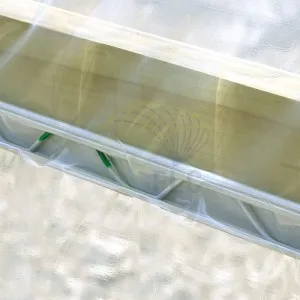
At its core, the system consists of two distinct but inseparable components. The first is the lock channel, a specially designed profile, typically extruded from aluminum or formed from galvanized steel wigglewires.com. This channel is affixed directly to the structural members of the greenhouse—the hoops, hip boards, and baseboards. Its specific shape, a precisely dimensioned U- or C-shaped trough, is not arbitrary. It is engineered to perfectly receive its counterpart: the spring wire.
The spring wire, also known as a wiggle wire, is a piece of high-tensile steel formed into a continuous zigzag pattern. This wire is designed to be pressed into the channel over the top of the greenhouse covering. The magic happens in this interaction. The wire does not simply sit in the channel; its spring-like nature causes it to expand, exerting a constant outward pressure against the inner walls of the channel. The greenhouse film, trapped between these two forces, is held in place not by puncturing it with staples or clamping it at intermittent points, but by continuous, distributed friction along the entire length of the channel. This symbiotic relationship is the source of the system's strength. The channel provides the rigid, unyielding frame of reference, while the wire provides the active, adaptable pressure.
The Physics of Grip: Tension, Friction, and Pressure Distribution
To truly grasp the system's efficacy, one must consider the forces at play. When wind blows over a greenhouse, it creates both positive pressure on the windward side and negative pressure (lift) on the leeward side and roof. These forces pull at the greenhouse film, seeking any point of weakness. Older methods, such as using battens or staples, concentrate these forces at specific points. Imagine pulling on a sheet of paper held by a single thumbtack; the paper tears easily around the tack. This is analogous to how force concentration can lead to film failure.
The greenhouse lock channel and spring wire system subverts this problem by converting concentrated loads into distributed loads. The spring wire's zigzag shape ensures that it makes multiple points of contact per linear foot within the channel. The tension inherent in the bent steel wire is translated into a uniform pressure along the entire length of the film being held. This even distribution of pressure dramatically increases the force required to pull the film out. The coefficient of friction between the film, the wire, and the channel walls becomes the dominant resisting force. Because this friction is applied over a vast surface area (the entire length of all installed channels), the total grip is immense. It is a system that holds the film securely without creating the stress points that could become the origin of a tear, a principle critical for durability in regions prone to high winds, such as the coastal areas of South Africa or the open plains of Russia.
Why Older Methods Fall Short: A Comparative Look
Reflecting on the history of greenhouse construction illuminates the innovation that the lock channel and spring wire represent. Early or more basic methods often involved trapping the film between two pieces of wood (battens) screwed together, or simply stapling the film to a wooden frame.
Batten boards, while seemingly straightforward, are fraught with potential issues. The pressure they apply can be uneven, contingent on how tightly each screw is fastened and the straightness of the wood. Wood itself is dimensionally unstable; it swells and shrinks with changes in humidity, which can loosen the grip on the film over time. The screws create puncture points, and the sharp edge of the wood can be a site of abrasion, especially as the film expands and contracts with temperature.
Stapling is an even more direct source of failure. Each staple creates a puncture, a stress riser from which a tear can easily propagate under wind load. Furthermore, staples offer a very small contact area, providing minimal resistance to pull-out forces. These methods, while perhaps suitable for small, temporary cold frames in very mild climates, are inadequate for the demands of professional agriculture or for structures in challenging weather environments. The greenhouse lock channel and spring wire system offers a solution that is not only stronger but also gentler on the delicate film it is designed to protect, significantly extending the covering's lifespan and, by extension, the security of the crops within.
Step 1: Deliberating on Materials for Your Greenhouse Lock Channel and Spring Wire
The selection of materials for your greenhouse lock channel and spring wire is not a trivial decision. It is the first and perhaps most consequential choice you will make in ensuring the long-term resilience of your greenhouse covering. The materials you choose will directly influence the system's lifespan, its resistance to environmental stressors, and the ease with which it can be installed and maintained. The optimal choice is not universal; it is deeply contextual, depending on your specific climate, the type of structure you are building, and your budget. A grower in the humid, salt-laden air of coastal Southeast Asia faces different challenges from a grower in the dry, high-UV environment of the Middle East. A thoughtful deliberation, informed by an understanding of material science, is therefore an exercise in foresight and risk management.
The Channel Dilemma: Aluminum versus Galvanized Steel
The lock channel forms the backbone of the system, and it is primarily available in two materials: aluminum and galvanized steel.
Aluminum channels are typically extruded, a process that allows for precise and complex profiles. Their primary advantage is their exceptional corrosion resistance. Aluminum naturally forms a passive, protective oxide layer on its surface when exposed to air. This layer is highly resistant to rust and degradation, making aluminum the superior choice for humid environments, coastal areas with salt spray, or greenhouses where frequent foliar spraying or misting occurs. They are also lightweight, which can make them easier to handle and install, particularly when working at height. The main drawback of aluminum is its higher initial cost compared to steel.
Galvanized steel channels are formed from sheet steel that has been coated with a layer of zinc. The zinc provides sacrificial protection against corrosion; it will corrode in preference to the steel, but this protection is finite. The thickness of the zinc coating (specified in grams per square meter, such as G90) determines its lifespan wigglewires.com. Galvanized steel is stronger and more rigid than aluminum, which can be an advantage in applications requiring greater structural stiffness. It is also more economical, making it a popular choice for large-scale projects or for growers on a tighter budget. However, its Achilles' heel is its vulnerability at cut ends or where scratches penetrate the zinc coating. These areas can become initiation points for rust, which can then creep under the coating, compromising the channel.
A Tale of Two Metals: A Detailed Comparison Table
| Feature | Aluminum Lock Channel | Galvanized Steel Lock Channel |
|---|---|---|
| Corrosion Resistance | Excellent. Naturally forms a protective oxide layer. Ideal for humid, coastal, or high-moisture environments. | Good to Very Good. Depends on the thickness of the zinc coating (e.g., G90). Vulnerable at cuts and scratches. |
| Weight | Lightweight. Easier to handle and transport, reduces load on the greenhouse structure. | Heavier. Provides more rigidity but can be more cumbersome to install. |
| Strength & Rigidity | Good. Sufficient for most applications. Can be bent to follow curves of the structure. | Excellent. Higher tensile strength and rigidity. Less prone to bending under load. |
| Cost | Higher initial investment. | More economical. Lower upfront cost. |
| Lifespan | Very long. Can last for decades with minimal degradation. | Long, but finite. Lifespan is tied to the life of the zinc coating, which is sacrificial. |
| Best Use Case | Humid climates (Southeast Asia), coastal regions (South Africa), high-value crop greenhouses, hoop houses requiring easy bending. | Drier climates (parts of the Middle East), budget-conscious projects, structures requiring maximum rigidity. |
The Spring Wire Spectrum: PVC-Coated versus Bare Galvanized
The spring wire is the active component, and its quality is paramount. Like the channel, it is also available in different forms.
PVC-coated spring wire is a high-tensile steel spring that has been encased in a layer of ultraviolet (UV) stabilized polyvinyl chloride (PVC). This coating serves two critical functions. First, it provides an exceptional barrier against moisture and corrosive elements, preventing the underlying steel from rusting. This is hugely important, as a rusted wire can lose its springiness and fail. Second, the smooth, slightly soft plastic coating is much gentler on the greenhouse film. It reduces the risk of abrasion and chafing as the film expands and contracts with temperature, a common cause of premature failure at contact points. The PVC coating also makes the wire easier to handle, as it is less abrasive on the hands during installation. For a deeper dive into wire options, a practical buyer's guide can offer additional insights.
Bare galvanized spring wire is a more basic option. It relies solely on a zinc coating for corrosion protection. While functional and less expensive, it lacks the secondary benefits of a PVC coating. The metal-on-plastic contact can be more abrasive to the greenhouse film over time. The galvanization can wear away, especially with repeated installation and removal, exposing the steel to rust. A rusted wire not only loses its effectiveness but can also stain the greenhouse film, reducing light transmission.
Material Selection for Different Greenhouse Coverings
| Covering Material | Recommended Channel | Recommended Spring Wire | Rationale |
|---|---|---|---|
| Single Layer Polyethylene Film | Aluminum or Galvanized Steel | PVC-Coated | PVC coating is gentle on the single layer of film, preventing abrasion and extending its life. Channel choice depends on climate and budget. |
| Double Layer Polyethylene (Inflated) | Aluminum | PVC-Coated | Holding two layers requires a secure, non-abrasive grip. Aluminum is often preferred due to the high-humidity environment inside the inflated layers. |
| Woven Polyolefin Fabric | Galvanized Steel or Aluminum | PVC-Coated or Galvanized | Woven fabrics are more durable than film. A galvanized wire may be acceptable, but PVC is still preferred for longevity and ease of handling. |
| Shade Cloth | Galvanized Steel or Aluminum | PVC-Coated | PVC coating prevents snagging on the open weave of the shade cloth and protects the wire from UV exposure when the cloth is removed. |
| Insect Netting | Aluminum | PVC-Coated | The fine mesh of insect netting is delicate. A smooth, PVC-coated wire is essential to avoid tearing the mesh during installation. |
Adapting to Your Climate: Material Choices for Global Regions
Let us consider the practical application of this knowledge in the target regions.
-
South America: In the Amazon basin or coastal Brazil, high humidity and rainfall are constants. Here, an aluminum channel is the most logical investment for its superior corrosion resistance. Paired with a PVC-coated spring wire, this combination offers the longest possible service life. In the more arid regions of Chile or Argentina, a high-quality G90 galvanized steel channel could be a cost-effective and durable alternative.
-
Russia: The vastness of Russia presents diverse conditions. In the southern agricultural regions near the Black Sea, humidity can be a factor, pushing the choice toward aluminum. However, the primary concern across much of the country is the extreme temperature differential between summer and winter. Materials must resist embrittlement in deep cold. Both high-quality steel and aluminum perform well, but the expansion and contraction of the greenhouse structure and film will be significant. A PVC-coated wire is highly recommended here, as its smooth surface will minimize friction and wear on the film during these thermal cycles.
-
Southeast Asia: This region is characterized by high heat, intense humidity, and often, proximity to the coast. This is arguably the most challenging environment for metals. An aluminum lock channel is not just a recommendation; it is almost a necessity for long-term success. Galvanized steel, unless of the highest marine-grade specification, will have a severely limited lifespan. A thick, UV-stabilized PVC coating on the spring wire is equally critical to protect the steel core from rapid corrosion.
-
The Middle East: Here, the primary adversary is not moisture but intense solar radiation. The UV index is extremely high, which accelerates the degradation of plastics. While the climate is dry, making galvanized steel a viable option for the channel, the spring wire must have a UV-stabilized PVC coating. An unstabilized coating will become brittle and crack under the relentless sun, exposing the wire beneath. The high temperatures also mean significant thermal expansion of the film, again making the smooth surface of a coated wire beneficial.
-
South Africa: This country presents a mix of climates. The Western Cape has a Mediterranean climate, while the eastern coast near Durban is subtropical and humid. Inland, the Highveld is drier and has a wider temperature range. For coastal applications, aluminum channels are the wise choice. For inland projects, galvanized steel can suffice. In all cases, the intense African sun makes a high-quality, UV-stabilized PVC-coated spring wire a prudent investment to protect both the wire and the film.
The choice of material is a foundational act of building that resonates through the entire life of the greenhouse. It is an investment in peace of mind, a hedge against the inevitable challenges of the local environment.
Step 2: Preparing the Greenhouse Frame for Installation
With materials thoughtfully selected, the focus shifts to the greenhouse structure itself. The most sophisticated greenhouse lock channel and spring wire system will fail to perform optimally if it is attached to a compromised or improperly prepared foundation. This preparatory stage is an exercise in diligence. It involves ensuring that the surfaces where the channels will be mounted are clean, smooth, and structurally sound. It is a process of creating a perfect canvas upon which the fastening system will be applied. Overlooking this step is like building a house on a shaky foundation; any imperfections in the substrate will be magnified in the final result, potentially leading to film abrasion, improper tension, or even structural failure of the channel itself.
Surface Integrity: Cleaning and Ensuring a Smooth Foundation
The lock channel must sit perfectly flush against the greenhouse frame. Any debris, old hardware, or surface irregularities can create gaps and pressure points.
Begin with a thorough cleaning of all surfaces that will receive a lock channel—this includes arches or hoops, hip boards, baseboards, and any end-wall framing. Use a stiff brush or a pressure washer to remove dirt, caked-on mud, algae, or residual adhesive from previous coverings. For metal frames, inspect for any rust scale or flaking paint. These must be removed with a wire brush or sandpaper down to the bare, solid material. A rusty surface does not provide a secure purchase for fasteners and will continue to degrade underneath the channel.
After cleaning, perform a tactile inspection. Run your hand along the framing members. Are there any sharp edges, burrs from welding, or protruding screw heads? These are enemies of your greenhouse film. A sharp edge can act like a knife, slicing into the film under the pressure of the spring wire. Any such imperfections must be filed down, sanded smooth, or removed entirely. The goal is to create a surface that is as smooth and non-abrasive as possible. This small investment of time pays huge dividends by eliminating potential failure points before the expensive covering is even unrolled.
Structural Assessment: Checking for Warps and Weak Points
A greenhouse frame is a dynamic structure, subject to forces from wind, snow, and the weight of the crops themselves. Over time, components can warp, bend, or become weakened. Installing a new covering system is the ideal time to conduct a thorough structural health check.
Sight down the length of long framing members like hip boards and baseboards. Are they straight, or have they bowed or twisted? A warped board will prevent the lock channel from lying flat, creating sections of high and low pressure. This uneven grip can lead to film slippage or tearing. Severely warped wooden members should be replaced. Minor warping in metal frames may be correctable, but any bent structural hoop or purlin needs careful evaluation.
Inspect all joints and connections. Are welds intact? Are bolts and screws tight? A loose connection can allow for flexing and movement, which will transfer stress directly to the lock channel and its fasteners. Pay special attention to the base of the structure. Ensure that ground posts are secure and have not heaved or sunk, which can throw the entire frame out of alignment. A square and true structure is essential for achieving the uniform film tension that the greenhouse lock channel and spring wire system is designed to provide.
Mapping Your Layout: Planning the Channel Placement
Before the first screw is driven, a clear plan for the channel layout is necessary. This involves more than just knowing which frame members get a channel. It involves thinking about the flow of work and the continuity of the seal.
Typically, lock channels are installed along the entire perimeter at the base (baseboards), along the arches or rafters where the end walls meet the roof, and along any hip boards or ridge purlins. For roll-up sidewalls, a channel will be installed on the hip board above the opening, and another channel will be attached to the roll-up pipe itself to secure the film.
Consider the length of your channels. They are often supplied in standard lengths (e.g., 2, 3, or 4 meters) . Plan where the joints between channel sections will fall. It is best practice to avoid placing joints at points of high stress, such as the apex of an arch. When joining two sections end-to-end on a straight run, ensure they butt up against each other tightly to create a nearly seamless groove for the spring wire. Some manufacturers offer swedged channels, where one end is slightly narrower to fit inside the next, creating a smoother transition.
Use a marker or a chalk line to map out exactly where the channels will be positioned. This ensures they are installed straight and level, which is not only aesthetically pleasing but also critical for even tensioning of the film. A pre-planned layout prevents mistakes and ensures that you have enough material on hand to complete the job without interruption. This methodical approach transforms the installation from a reactive task to a controlled, professional process.
Step 3: The Precise Art of Installing the Lock Channel
The installation of the lock channel is the moment where the system becomes a permanent part of the greenhouse skeleton. This process demands precision and a commitment to consistency. The goal is to affix the channel so securely that it acts as a monolithic extension of the frame itself, capable of withstanding the significant, repetitive loads it will experience over its lifetime. Every fastener is a point of load transfer, and the spacing and tightness of these fasteners are critical variables. This is not a step to be rushed. A carefully installed channel provides a flawless foundation for the film and wire, ensuring the entire system functions as its designers intended.
Essential Tools for the Task
Assembling the right tools before you begin is a hallmark of professionalism and efficiency. For installing the lock channel, your toolkit should be simple but specific:
- Variable-Speed Drill/Driver: This is your primary tool. A variable-speed function is crucial for driving screws to the correct tightness without stripping the head or the substrate. A cordless model offers maximum mobility.
- Appropriate Driver Bits: Use a high-quality bit that perfectly matches the head of your chosen fasteners (e.g., Phillips, hex head). A worn bit can slip and damage the screw.
- Self-Tapping Screws: The choice of fastener is paramount. For attaching to a metal frame (steel or aluminum), self-tapping screws are the industry standard. They drill their own hole and cut their own threads in a single operation. Select a screw length that will provide at least three full threads of engagement into the metal frame. For wooden frames, use high-quality exterior-grade wood screws.
- Measuring Tape and Marker/Chalk Line: For ensuring straight placement and consistent fastener spacing.
- Safety Glasses: An absolute necessity. Drilling into metal can create small, sharp shards.
- Clamps: Spring clamps or C-clamps can be invaluable for holding the channel in place while you drive the first few screws, especially when working alone.
The Fastening Process: Screws, Spacing, and Torque
The strength of the channel's attachment is dictated by the quality and spacing of the fasteners.
Fastener Spacing: A common mistake is to use too few screws to save time. This is false economy. The industry standard recommendation is to place a fastener every 40 to 60 centimeters (approximately 16 to 24 inches). In high-wind areas, it is wise to reduce this spacing to 30 centimeters (12 inches). This closer spacing distributes the wind load across more points, reducing the stress on any single screw and minimizing the chance of the channel pulling away from the frame. It is also critical to place a screw within 5 centimeters (2 inches) of each end of every channel section.
Driving the Screws: When using self-tapping screws on a metal frame, start the drill at a low speed to allow the tip to bite into the metal. Once it starts cutting, you can increase the speed. The most important technique is to apply firm, consistent pressure in line with the screw. As the screw head nears the channel, slow the drill right down. The goal is to tighten the screw until the head is seated firmly against the channel, slightly compressing the material. Do not overtighten. Overtightening can strip the threads you just created in the frame, rendering the fastener useless. It can also deform the channel, which can impede the insertion of the spring wire. Develop a feel for the correct torque—just snug is perfect.
For a wooden frame, it is good practice to pre-drill pilot holes, especially when working with hardwoods or near the end of a board, to prevent splitting.
Navigating Curves and Corners: Techniques for a Flawless Fit
Greenhouses are not always made of straight lines. Hoops, arches, and gothic peaks are common features. The lock channel must follow these curves perfectly.
Bending the Channel: Both aluminum and steel channels can be bent to conform to a curve. Aluminum is generally more malleable and easier to bend smoothly. To do this, start at one end of the arch and fasten the channel. Then, working your way along the curve, gently press the channel against the frame and install the next screw. The act of screwing it down will pull the channel into the curve. Use a closer screw spacing (e.g., every 20-30 cm) when navigating a tight radius to ensure the channel follows the curve accurately and to prevent it from kinking. Do not try to pre-bend the entire length of the channel before installation; bend it progressively as you fasten it.
Creating Corners: At a 90-degree corner, such as where a sidewall meets an end wall, you have two options. The first is to stop one channel at the corner and start a new one, leaving a very small gap. The second, and generally preferred, method is to miter the channels. Using a miter saw with a blade appropriate for metal, cut the ends of the two meeting channels at a 45-degree angle. When installed, they will form a clean, continuous corner. This provides a smoother path for the film and spring wire and is a more professional finish. When mitering, always wear safety glasses and be sure to file down any sharp burrs created by the cut.
The successful installation of the lock channel is a methodical, repetitive process. It is the rhythm of measure, place, and fasten, repeated until the entire skeleton is ready. The uniformity of your work at this stage will be directly reflected in the final appearance and performance of the greenhouse skin.
Step 4: Laying and Positioning the Greenhouse Covering
With the lock channels providing a rigid, expectant framework, the moment arrives to introduce the most visible and vital element: the greenhouse covering. This stage is one of scale and delicacy. You are handling a large, unwieldy, yet fragile sheet of material that represents a significant investment. The objective is to deploy this covering over the structure and position it with the correct amount of tension—not too loose, not too tight—in preparation for being locked into place. The weather, the number of people involved, and the technique used all play a crucial role in the success of this operation. A calm day and a patient hand are your greatest assets.
Handling the Film: Avoiding Pre-Installation Damage
Greenhouse film, typically polyethylene, is remarkably strong for its thickness but is highly susceptible to punctures and tears before it is installed and properly tensioned. The roll of film should be handled with care. Never drag it across rough surfaces like gravel or concrete. When you are ready to deploy it, lay down a clean ground tarp or a piece of spare film to protect it.
The process of pulling the film over the greenhouse is best accomplished with a team. For a typical hoop house, two people on one side can unfold the film along the length of the building, while two or more people on the other side pull it over the top using ropes. It is often helpful to attach ropes to a sturdy pipe or board that has been rolled into the leading edge of the film. This distributes the pulling force and prevents the ropes from tearing through the plastic.
As the film is pulled over, have team members watch for snags. The film can easily catch on a protruding screw, a sharp corner of a vent, or any other part of the frame that was not properly prepared in Step 2. Pulling against a snag will almost certainly result in a tear. If a snag occurs, stop, identify the cause, and clear it before continuing.
Achieving the Right Tension: The "Just-Right" Stretch
This is the most nuanced part of the process and often where experience is the best teacher. The goal is to secure the film so that it is taut and free of wrinkles, but not stretched to its elastic limit.
Why is tension so important? A loose film will flap and billow in the wind. This constant movement, known as flogging, causes fatigue and abrasion against the frame and eventually leads to failure. A film that is too tight, on the other hand, has no room to give. Polyethylene film expands in the heat and contracts in the cold. A film installed drum-tight on a hot day will become incredibly taut on a cold night, placing immense stress on itself and the lock channel system. This can lead to premature tearing or can pull the fasteners out of the frame.
The ideal time to install film is on a calm, overcast day with mild temperatures (e.g., 15-25°C or 60-75°F). Avoid windy days at all costs. Also, avoid installing on a very hot, sunny day, as the film will be highly expanded, and you will likely install it too loosely. Conversely, installing on a very cold day can lead you to install it too tightly.
The process of tensioning typically starts at one corner. Temporarily secure the film, then move to the opposite corner, pulling gently to remove the major wrinkles. Work your way down the length of one side, then the other, applying gentle, even pulls. The film should feel snug to the touch, and large wrinkles should disappear, but you should not have to exert significant force to stretch it into place. It’s an art of feeling the material and anticipating its response to temperature changes.
Working with Multiple Layers for Inflation
Many modern greenhouses, especially in cooler climates like Russia or parts of South America, use a double layer of film with an inflation fan. This creates an insulating air gap that can significantly reduce heating costs. The greenhouse lock channel and spring wire system is perfectly suited for this application.
When installing a double layer, both sheets of film are pulled over the structure simultaneously. It is critical to ensure that there are no wrinkles or folds trapped between the two layers. Once the films are in position, they are both inserted into the same lock channel. The spring wire is designed to hold two layers of standard greenhouse film (e.g., 6 mil or 150 micron) securely . You can even secure a third layer, such as a shade cloth, in the same channel with a second spring wire.
When tensioning a double layer, the process is the same, but you are handling twice the material. Once the outer edges are secured, a small inflation blower is attached via a special flange to the inner layer. The blower pressurizes the space between the two films, pushing them apart and making them both drum-tight. This inflation provides the final, perfect tension and creates the insulating barrier. The integrity of the seal provided by the greenhouse lock channel and spring wire is absolutely paramount for an inflation system to work; any leaks will cause the blower to run constantly and will prevent the layers from staying properly separated.
Step 5: Mastering the "Wiggle": Inserting the Spring Wire
This is the climactic step where the system is finally engaged. The act of inserting the spring wire, or "wiggling it in," is what locks the film into place and brings all the previous preparatory steps to fruition. It is a physical and rhythmic process that, once mastered, is remarkably fast and effective. The technique is simple, but as with any craft, there is a right way to do it that ensures a secure, uniform grip without damaging the channel, the wire, or the film.
The Correct Technique: A Rhythmic Approach
The key to inserting the wire is to use its own shape to your advantage. Do not try to push it straight down into the channel. This requires excessive force and can damage the film. Instead, use a side-to-side "wiggling" motion.
Start at one end of the channel. Insert the tip of the spring wire and hook it under one edge of the channel profile. Now, begin the rhythm: push the wire toward the opposite side of the channel while also applying downward pressure. The wire will "walk" itself into the channel. As you move along the channel, continue this rhythmic, rocking motion—left, down, right, down, left, down. Your hands should be moving in a smooth, continuous pattern.
This technique uses leverage and the wire's geometry to seat it with minimal force. The wire slides gently over the film, pressing it into the channel's embrace. You will feel a satisfying "click" or seating sensation as the wire settles into its final position. The pressure should be firm but not brutal. Let the tool—the wire's shape—do the work. For a visual demonstration of this process, many suppliers provide helpful videos wigglewires.com.
Starting, Splicing, and Finishing a Run
Properly managing the beginning, middle, and end of each wire run ensures a continuous, unbroken seal.
Starting a Run: Begin by inserting about 15-20 centimeters (6-8 inches) of the wire into the channel. This initial section anchors the film, allowing you to apply tension as you work your way down the line.
Splicing Wires: Spring wires come in finite lengths (typically around 2 meters or 6.5 feet). You will inevitably need to join them to cover a long run. To create a strong splice, overlap the two wire ends. The standard practice is to overlap them by at least 10-15 centimeters (4-6 inches). Wiggle the first wire in until you are near its end. Then, start the second wire, placing its beginning over the top of the first wire's end, and continue the wiggling process. Both wires will sit together in the channel for the length of the overlap, creating a seamless transfer of pressure and ensuring there are no gaps in the grip.
Finishing a Run: When you reach the end of a channel, the spring wire will likely be too long. Do not simply leave it hanging. You need to cut it to length. However, do not cut it flush with the end of the channel. Leave about 5-10 centimeters (2-4 inches) of excess wire. Bend this excess piece back over itself and tuck it down into the channel. This prevents the sharp, cut end of the wire from being exposed, where it could snag clothing or skin, and it also helps to lock the end of the wire in place, preventing it from backing out over time.
Securing Multiple Layers: Film and Shade Cloth
The versatility of the greenhouse lock channel and spring wire system is one of its greatest assets. It is designed to hold multiple layers of material securely.
Two Layers (e.g., Double Inflated Film): When securing two layers of standard greenhouse film, you insert them into the channel together. Then, a single spring wire is wiggled in over the top of both. The system is engineered to provide enough pressure to hold both layers firmly.
Three or More Layers (e.g., Film plus Shade Cloth): What if you want to add a shade cloth over your main greenhouse film? The best practice is to use a second spring wire. First, install the main greenhouse film (or double layer) with one spring wire. This secures your primary environmental barrier. Then, lay the shade cloth over the top and use a second spring wire, wiggled into the same channel, to hold the shade cloth in place.
This two-wire method has a major advantage: it allows for the independent removal of the layers. When winter comes and you want to remove the shade cloth to maximize light, you can simply pull out the second wire without disturbing the main greenhouse film. This modularity is incredibly useful for managing the greenhouse environment throughout the seasons. It is this adaptability that makes the greenhouse lock channel and spring wire system a cornerstone of modern, responsive agriculture.
Step 6: Conducting Post-Installation Inspections for a Perfect Seal
The final spring wire has been wiggled into place, and the greenhouse stands fully clad. It is a moment of satisfaction, but the job is not quite finished. A final, meticulous inspection is the capstone of a professional installation. This is the quality control phase, where you verify that the system is performing as intended and proactively identify any minor issues before they can be escalated by wind or weather into major problems. This inspection is a dialogue with your work, a process of looking and feeling to confirm the integrity of the seal you have so carefully created. It is the step that provides the ultimate peace of mind.
The Visual Check: Searching for Gaps and Puckers
Your eyes are your first and most important inspection tool. Walk the entire perimeter of the greenhouse, both inside and out. Look closely at every inch of the lock channel.
Examine for Uniformity: The spring wire should sit at a consistent depth within the channel along its entire length. If you see sections where the wire is sitting high or looks shallow, it may indicate that it is not properly seated or that there is an obstruction in the channel.
Look for Puckers and Wrinkles: Stand back and look at the broad surfaces of the film. They should be smooth and taut. Pay close attention to the areas immediately adjacent to the lock channels. Are there any small, tight wrinkles or puckers radiating out from the channel? This can be a sign that the film was pulled unevenly during tensioning or that the spring wire has pinched the film. Small wrinkles can be stress points and may need to be addressed by removing a section of wire, smoothing the film, and reinstalling it.
Search for Gaps: Peer closely at the joints between channel sections and at the corners. Ensure that the film is held securely in these transition zones. There should be no visible gaps where wind or water could penetrate. A tight miter joint at a corner should show a continuous grip on the film.
The Tactile Test: Feeling for Uniform Tension
Your sense of touch can reveal issues that your eyes might miss. The tactile test is about assessing the consistency of the grip.
Running Your Fingers: Gently run your fingers along the outside of the spring wire where it sits in the channel. You should feel a smooth, consistent contour. If you feel a bump or a loose spot, it warrants a closer look. It could mean the wire has popped out slightly or is not seated correctly.
The "Thump" Test: On the larger surfaces of the film, away from the channels, gently tap the film with your fingers. It should produce a dull, taut "thump," like a low-pitched drum. The pitch and feel should be relatively consistent across the entire surface. If you find an area that feels significantly looser and produces a flabby sound, it indicates a lack of tension in that zone. This might require adjusting the tension by reinstalling a section of the film.
Pressing on the Wire: Apply gentle, firm pressure with your thumb directly onto the spring wire in the channel at various points. It should feel solid and unmoving. If the wire gives or "clicks" down further under pressure, it was not fully seated during installation. This section should be removed and wiggled in again correctly.
Simulating Stress: Preparing for Wind and Rain
A final check involves simulating the forces that the greenhouse will face.
The Push Test: From inside the greenhouse, gently but firmly push outward on the film near the lock channel. The film should remain securely in its grip. There should be no sign of the film slipping or the spring wire moving. This simulates the effect of positive wind pressure.
Water Testing (Optional but Recommended): If possible, use a hose to spray water over the roof and sides of the greenhouse, focusing on the areas with lock channels. From inside, check for any leaks. This is the ultimate test of your seal's integrity. A properly installed greenhouse lock channel and spring wire system should be completely watertight. Finding and fixing a small leak now is far easier than dealing with water damage to your crops later.
This final inspection is not about finding fault with your work but about perfecting it. It is the last opportunity to make small adjustments that will ensure the system provides years of reliable service, protecting the controlled environment within from the unpredictable world outside. It is the seal of quality on a job well done.
Step 7: Long-Term Maintenance and Proactive Care for System Longevity
The installation of your greenhouse lock channel and spring wire system marks the beginning, not the end, of its service life. Like any component exposed to the elements, it requires periodic attention to ensure it continues to perform its function effectively. Proactive maintenance is a philosophy of care that seeks to prevent failures rather than simply react to them. It involves regular inspections and an understanding of how materials age and respond to environmental stress. This sustained vigilance will maximize the lifespan of your investment, ensure the ongoing protection of your crops, and save you from costly emergency repairs.
The Seasonal Inspection Regimen
The changing seasons bring different stresses to your greenhouse. A structured inspection schedule, tied to these seasonal shifts, is an effective way to stay ahead of potential problems.
After Major Weather Events: The most critical time to inspect your greenhouse is immediately following a major storm with high winds or a heavy snow load. Walk the entire structure. Look for any signs of film slippage, or check if any sections of spring wire have been dislodged. These are the moments of highest stress, and they are most likely to reveal any underlying weaknesses in the system.
Spring Inspection: As you prepare for the main growing season, conduct a thorough check. This is the time to look for any damage that may have occurred over the winter. Check the tension of the film; it may have loosened slightly. Inspect the channels and wires for any signs of corrosion or degradation that have appeared. This is also a good time to clean the film and the channels to maximize light transmission.
Autumn Inspection: Before winter sets in, perform another comprehensive inspection. Ensure the film is properly tensioned to withstand winter winds and potential snow loads. Check that all fasteners are still tight. Clear any accumulated debris like leaves or twigs from the channels, as this can trap moisture and accelerate corrosion. This pre-winter check-up ensures your greenhouse is buttoned up and ready for the harshest season.
Recognizing Material Fatigue and Degradation
Over years of service, the materials will inevitably show their age. Knowing what to look for allows you to plan for replacement before a critical failure occurs.
Channel Corrosion: On galvanized steel channels, look for the tell-tale signs of rust—reddish-brown streaks, bubbling of the surface, or flaking. Pay special attention to cut ends and any areas that were scratched during installation. While some surface rust may be cosmetic, advanced corrosion can weaken the channel and compromise its grip. Aluminum channels are much more resistant but can show pitting or a white, powdery oxidation in very harsh, salty environments.
Wire Degradation: For PVC-coated wires, the primary concern is the health of the coating. Under intense UV exposure, the PVC can become brittle, crack, or peel. This exposes the steel spring beneath to moisture and rust. A rusted wire will lose its elasticity and its ability to hold the film securely. A wire that feels brittle or shows visible cracks in its coating should be scheduled for replacement. For bare galvanized wires, look for signs of rust, which indicate the protective zinc coating has been exhausted.
Fastener Integrity: Check the heads of the screws. Are they rusting? A rusted screw can fail, and the rust can stain the surrounding area. Attempt to tighten a few random screws. If they spin freely without tightening, the threads in the frame have stripped, and a larger diameter screw may be needed to secure that spot.
Proper Removal and Reinstallation Techniques
There will come a time when you need to replace your greenhouse film, which requires removing and reinstalling the spring wire. Doing this correctly is vital for the longevity of the system.
Removing the Wire: Do not try to pull the wire straight out. This is difficult and can damage the wire and the channel. Instead, reverse the installation process. Use a tool—a specialized wire removal tool is best, but a pair of pliers or even your fingers can work—to get under one end of the wire and lift it up. Once you have a starting point, pull the wire out of the channel at a low angle, almost parallel to the film. It should peel out smoothly.
Handling and Storing the Wire: If you plan to reuse the spring wire, handle it with care. Avoid bending it into sharp kinks. Store it in a dry place, out of direct sunlight, to preserve the integrity of the PVC coating.
Reinstallation: When installing a new film, you will be reusing the same channels. It is a best practice to avoid using the exact same screw holes in the frame if possible, especially on a wooden structure. Shifting the channel location by even a centimeter or two allows the new screws to bite into fresh material, ensuring a stronger hold. When reinstalling the spring wire, inspect it one last time for any signs of damage or rust. Do not be tempted to reuse a compromised wire; the cost of a new wire is insignificant compared to the cost of a failed greenhouse covering.
This commitment to long-term care transforms the greenhouse from a static object into a managed system. It is an acknowledgment that resilience is not just about initial strength, but about sustained health and attention over time.
Frequently Asked Questions (FAQ)
Q1: Can I install two layers of film and a shade cloth in the same greenhouse lock channel? Yes, this is a common and effective practice. The standard method is to first install the two layers of greenhouse film using one spring wire. This secures your primary, insulated covering. Then, you lay the shade cloth over the top and use a second spring wire in the same channel to fasten it. This allows you to remove the shade cloth seasonally by simply removing the second wire, without disturbing the main greenhouse film. Most quality channel and wire systems are designed to accommodate this.
Q2: What is the expected lifespan of a greenhouse lock channel and spring wire system? The lifespan depends heavily on the materials chosen and the local climate. An aluminum channel with a PVC-coated spring wire in a mild climate can last for 15-20 years or more. A high-quality G90 galvanized steel channel might last 7-10 years in a dry climate but only 3-5 years in a humid, coastal environment. The PVC-coated wire's lifespan is often 5-8 years, primarily limited by UV degradation of the plastic coating. Bare galvanized wire may last 2-4 years before rust becomes an issue.
Q3: My greenhouse has a curved roof. Can I bend the lock channel to fit it? Absolutely. Both aluminum and galvanized steel channels are designed to be bent to follow the contours of greenhouse arches. The recommended technique is not to pre-bend the channel but to fasten it at one end of the curve and then progressively bend it into place by installing screws at a closer-than-normal spacing (e.g., every 20-30 cm). Aluminum is generally easier to bend smoothly than steel.
Q4: What should I do if my greenhouse film tears right at the edge of the lock channel? A tear at the channel edge usually indicates a problem with abrasion or a stress point. First, remove the spring wire in that section. The best solution is to use a specialized greenhouse repair tape to patch the tear on both sides of the film. Before reinstalling the wire, carefully inspect the channel and wire for any sharp edges, burrs, or rust that could have caused the tear and smooth them out. When reinstalling, ensure the film is not overly tight in that area.
Q5: How far apart should the screws be when I install the lock channel? For standard conditions, a screw spacing of 40-60 centimeters (16-24 inches) is sufficient. However, in areas known for high winds, it is strongly recommended to reduce this spacing to 30 centimeters (12 inches) for added security. Always place a screw within 5 centimeters (2 inches) of both ends of every individual channel piece to prevent the ends from lifting.
Conclusion
The examination of the greenhouse lock channel and spring wire system reveals a technology that is elegant in its simplicity and profound in its impact. It is more than a mere collection of hardware; it is the critical interface between the controlled, nurturing environment of the greenhouse and the often-unforgiving forces of the natural world. The journey from selecting the appropriate materials—a decision deeply rooted in the specificities of climate and context—to the final, meticulous inspection of the installed system is a testament to the principle that excellence in agriculture is built upon a foundation of sound engineering and thoughtful practice.
The strength of this system does not reside in brute force but in the intelligent distribution of stress, in the gentle yet firm embrace of the spring wire within its channel. This protects the delicate film from the very forces it is designed to resist. To engage with this system, to understand the physics of its grip and the chemistry of its materials, is to elevate the act of building from a task to a craft. It is to recognize that the long-term security of a crop, a season's labor, and a grower's livelihood can depend on the integrity of this single, crucial component. The diligent application of the principles and practices outlined here is, therefore, an investment in resilience, stability, and ultimately, in the success of the agricultural endeavor itself.
References
Alibaba. (n.d.). Greenhouse wiggle wire and lock channel for fastening plastic film shade net. Retrieved January 15, 2026, from
Beijing Fenglong Hitech Co., Ltd. (n.d.-a). Greenhouse construction materials and equipment supplier. Wigglewires.com. Retrieved January 15, 2026, from https://www.wigglewires.com/
Beijing Fenglong Hitech Co., Ltd. (n.d.-b). Video. Wigglewires.com. Retrieved January 15, 2026, from https://www.wigglewires.com/video/
Beijing Fenglong Hitech Co., Ltd. (n.d.-c). Wiggle wire channel category. Wigglewires.com. Retrieved January 15, 2026, from https://www.wigglewires.com/wiggle-wire-channel-category/
Espí, E., Salmerón, A., Fontecha, A., García, Y., & Real, A. I. (2006). Plastic films for greenhouse covering. Journal of Plastic Film & Sheeting, 22(2), 85–101.
Gheshlaghi, A., & Scherer, G. W. (2018). Models for corrosion of galvanized steel in soil. Materials and Corrosion, 69(11), 1562–1575. https://doi.org/10.1002/maco.201810201
Jiangsu Skyplan Greenhouse Technology Co., Ltd. (n.d.). Greenhouse wiggle wire. Spgreenhouse.com. Retrieved January 15, 2026, from
Kumar, K. S., O'Brien, I., & Khennane, A. (2016). A numerical study of the effect of wind on a multi-span greenhouse. Journal of Wind Engineering and Industrial Aerodynamics, 157, 47–58.
Wigglewires.com. (2024). What is a wiggle wire? A practical buyer's guide for 2025's harshest weather. Retrieved January 15, 2026, from https://www.wigglewires.com/what-is-a-wiggle-wire-a-practical-buyers-guide-for-2025s-harshest-weather-article/