
A 6-Step Expert Guide for 2025: How to Install Wiggle Wire Channels on Growers Solution
12월 8, 2025
Abstract
The Wiggle Wire Lock Channel system constitutes a pivotal technological element in contemporary greenhouse construction, offering a secure and remarkably efficient means for affixing polyethylene films and alternative coverings to a greenhouse framework. A thorough examination of this system illuminates its elemental components: a robust base channel, typically fabricated from aluminum or galvanized steel, and a spring-like steel wire. The system's efficacy emanates from the mechanical interplay between these parts, which generates a continuous, high-friction grip on the covering material without inflicting punctures. This mechanism ensures a weatherproof seal, safeguarding crops from inimical conditions such as high winds, torrential rain, and significant temperature fluctuations. The selection of materials, particularly the choice between PVC-coated and bare galvanized steel wire, carries substantial implications for the longevity of the greenhouse film. Coated wires afford superior protection against abrasion, especially for thinner films. Proper methodology in the installation process, encompassing meticulous frame preparation, precise channel alignment, and correct wire insertion technique, is of paramount importance to maximize the system's performance and durability across the globe's diverse climates.
Key Takeaways
- Properly install Wiggle Wire Channels on Growers Solution for a secure, weatherproof seal.
- Choose PVC-coated wire for thinner films to prevent abrasion and extend their operational life.
- Select galvanized steel wire for thicker, woven plastics to achieve superior strength.
- Install greenhouse film on a warm, calm day to attain optimal, lasting tension.
- Ensure the channel is securely fastened to the frame to withstand high winds.
- Regularly inspect the system for any signs of wear to guarantee crop protection.
- Combine with a quality ventilation system for comprehensive environmental control.
Table of Contents
- Understanding the Wiggle Wire Lock Channel System: A Foundational Overview
- Step 1: Meticulous Planning and Material Selection
- Step 2: Preparing the Greenhouse Frame for Installation
- Step 3: The Art of Installing the Lock Channel
- Step 4: Draping and Positioning the Greenhouse Polyethylene Film
- Step 5: Mastering the Wiggle Wire Insertion Technique
- Step 6: Final Inspections, Adjustments, and Long-Term Maintenance
- Integrating the System with Other Greenhouse Components
- Frequently Asked Questions (FAQ)
- Conclusion
- References
Understanding the Wiggle Wire Lock Channel System: A Foundational Overview
The structural integrity of a greenhouse is not a simple function of its skeletal frame; it is profoundly contingent upon the method employed to attach its protective skin. This covering, most frequently a greenhouse polyethylene film, stands as the principal barrier between the deliberately cultivated internal environment and the often capricious climate outside. The Wiggle Wire Lock Channel system emerges within this context not as a mere component, but as an elegant and remarkably effective philosophy for accomplishing this critical task. To truly grasp its utility, one must first deconstruct the system into its constituent parts and comprehend the physical principles that govern its function. It is a system born from an acute need for reliability, simplicity of use, and profound strength, especially in regions that must contend with severe weather, from the gusting winds of the South African Highveld to the heavy snows of the Russian winter.
Let us pause to contemplate the forces that act upon a vast sheet of plastic stretched taut over a frame. Wind generates not only positive pressure, pushing against the film, but also a powerful negative pressure, or suction, that attempts to pull it away. Rain and snow introduce significant weight, creating a downward force that strains the material. The heat of the sun causes the film to expand, while the cold of night or winter causes it to contract. A fastening system must wrestle with all these dynamic forces, not just once, but continuously, day after day. The old ways of using simple staples or wooden battens create localized stress points and, critically, puncture the film. These punctures become inherent weaknesses, often the very first points of failure in a storm. The Wiggle Wire Lock Channel, in stark contrast, distributes the load evenly along the entire length of the channel. It creates a continuous grip that is both gentle on the delicate film and exceptionally tenacious.
The Anatomy of the System: Channel vs. Wire
At its core, the system is a duet between two distinct but inseparable components: the lock channel and the wiggle wire.
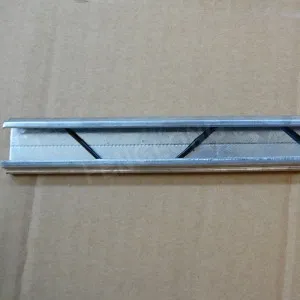
The channel, often called a U-channel or base channel, is the stationary, foundational element of the system. It is a length of extruded metal, most commonly aluminum or galvanized steel, which has been precisely shaped to form a specific profile. This profile is not a simple “U”; it is carefully engineered with internal curves and lips designed to receive and securely hold the corresponding wiggle wire. As noted by specialized suppliers, quality channels often incorporate features like a center groove to guide self-drilling screws, a small detail that drastically simplifies the installation process wigglewires.com. The channel is affixed with screws directly onto the greenhouse frame—the hip boards, baseboards, and any end-wall framing where the plastic film needs to terminate. It forms the permanent track into which the film and wire will be set.
The wiggle wire, also known as a spring wire or zig-zag wire, is the active, dynamic component. It is a piece of high-tensile spring steel that has been bent into a continuous zig-zag pattern. This wire is what gives the system its name and its unique, effective functionality. When the greenhouse film is laid over the channel, the wiggle wire is pressed into the channel on top of the film. The wire’s inherent spring-like nature causes it to expand outward, pressing the film against the inner walls of the channel. The "wiggles" create multiple, alternating points of contact, generating immense friction that locks the film firmly in place. It is a beautifully simple application of physics that provides a grip so secure that it can hold multiple layers of material, such as a primary polyethylene film and a secondary shade cloth, within the very same channel.
Material Science: Why Aluminum and Steel Dominate
The selection of materials for the Wiggle Wire Lock Channel system is anything but arbitrary; it is a considered decision rooted in the demanding realities of the agricultural environment. Durability, resistance to corrosion, and raw strength are the primary virtues sought in these components.
The channel is almost universally fabricated from either aluminum or galvanized steel. Aluminum is lightweight, exceptionally resistant to rust and corrosion, and easy to cut and drill. Its inherent longevity makes it a premium choice, particularly in the humid climates of Southeast Asia or the coastal regions of South America, where salt spray is a constant corrosive threat. Galvanized steel, which is steel coated with a protective layer of zinc, presents a more economical alternative that still provides excellent strength and a high degree of corrosion resistance. The galvanization process acts as a sacrificial barrier, protecting the underlying steel from rust, though this protection can be compromised if the coating is deeply scratched or improperly handled. For the majority of applications, both materials perform admirably, with the final choice often resting on a balance between budget and specific environmental challenges.
The wiggle wire itself is crafted from high-tensile spring steel. This specific alloy is what allows it to be flexed during installation and then spring back to exert constant, unwavering pressure inside the channel. The most critical variation among wiggle wires lies in their coating, a detail that has profound implications for the life of your greenhouse covering.
| Wire Type | Primary Material | Coating | Best Use Case | Primary Advantage | Primary Consideration |
|---|---|---|---|---|---|
| PVC-Coated Wiggle Wire | High-Tensile Steel | Polyvinyl Chloride (PVC) | Thinner films (e.g., 6 mil), single-layer applications, high-value crops | Reduces friction and abrasion, prolonging film life and clarity. | Coating can degrade over many years with intense UV exposure. |
| Galvanized Wiggle Wire | High-Tensile Steel | Zinc (Galvanization) | Thicker woven plastics (e.g., 9-12 mil), high-stress areas, budget applications | Greater raw strength and durability, lower initial cost. | Can be rougher on plastics, potentially causing premature wear on thin films. |
As detailed in a practical buyer's guide, the choice represents a significant trade-off. A PVC-coated wiggle wire is smoother and gentler on the greenhouse film. The plastic coating acts as a soft buffer, reducing the friction and abrasion that can occur as the film expands and contracts with daily temperature cycles. Over thousands of these cycles, the friction from a rougher, uncoated wire can slowly wear down the film, creating microscopic scratches that develop into weak spots. The smooth PVC surface mitigates this wear, significantly extending the life of a standard 6-mil greenhouse polyethylene film (Giacomelli & Roberts, 1993). Therefore, for most standard single-layer greenhouse applications, especially in climates with wide diurnal temperature swings like those found in many parts of the Middle East, the coated wire is the superior long-term investment.
However, there are circumstances where the uncoated, galvanized wire is preferable. When using extremely durable, thick (9-mil or greater) woven polyethylene films, the material itself is far more resistant to abrasion. In these cases, the slight increase in gripping strength and the lower cost of the galvanized wire can make it the more logical choice. It is also favored in applications where maximum strength is the absolute priority, as the direct metal-on-tough-plastic contact provides a marginally more aggressive grip. A thoughtful grower must weigh the cost of the wire against the cost and lifespan of the film it is intended to secure. More often than not, protecting the more expensive and labor-intensive film is the wiser economic and agricultural decision.
The Physics of a Secure Grip: How It Works
The true genius of the Wiggle Wire Lock Channel lies in its elegant and effective application of fundamental physics. The system does not rely on chemical adhesives, which can fail with UV exposure, or on punctures, which create inherent weaknesses. Instead, it relies entirely on friction and distributed pressure.
When the wiggle wire is pressed into the channel over the film, a concert of forces comes into play. First, the wire, being made of spring steel, naturally wants to expand to its original, wider shape. This expansion exerts a constant outward force against the walls of the channel. Second, the zig-zag pattern of the wire creates a series of alternating pressure points. The peak of each "wiggle" pushes the film firmly against one side of the channel, while the trough of the next "wiggle" pushes it just as firmly against the opposite side.
This alternating pressure creates a tortuous, serpentine path for the film, effectively trapping it. To pull the film out, one would have to overcome the immense cumulative friction generated at dozens of points along every single meter of the channel. This is fundamentally different from a staple or a nail, where the entire force of a wind gust is concentrated on a single, small point of entry. With the wiggle wire system, that same wind force is distributed over the entire length of the installation, meaning no single point is under excessive stress. This distribution of force is what prevents tearing and ensures the system can withstand wind gusts that would shred a film attached with less sophisticated methods. The result is a fastening system that is not only exceptionally strong but also completely reversible, allowing for the easy removal and re-tensioning of the film whenever necessary.
Step 1: Meticulous Planning and Material Selection
The successful implementation of a Wiggle Wire Lock Channel system begins not with a drill or a hammer, but with quiet contemplation and careful planning. This initial phase, where the specific needs of the greenhouse project are thoughtfully matched with the appropriate materials, is the true foundation of a lasting structure. Rushing this stage is a false economy, as a poor choice here can lead to premature failure of the greenhouse covering, potential crop loss, and the frustrating necessity of costly replacements. The process demands a holistic assessment of the structure, its intended purpose, and the climatic realities it will be forced to endure.
Assessing Your Greenhouse Structure and Climate
The first act of planning is to engage in a close and critical examination of the greenhouse frame itself. Is it constructed of wood, steel, or aluminum? The nature of the frame will directly influence the choice of fasteners used to attach the lock channel. The locations where the film must be secured need to be identified with precision: the baseboards around the perimeter, the hip boards along the roofline, and the framing around doors, vents, and end walls. Every point where the greenhouse polyethylene film terminates is a candidate for a Wiggle Wire Lock Channel.
Simultaneously, one must consider the local climate with an almost meteorological focus. For growers in the intense sun of the Middle East or parts of South America, the primary concern might be extreme ultraviolet radiation and high temperatures, which can accelerate the degradation of both the film and any plastic components like PVC coatings. In this case, selecting a high-quality, UV-stabilized film and perhaps an aluminum channel for its superior heat dissipation and corrosion resistance would be a prudent choice. For a grower in Russia or other regions with significant snowfall, the dominant concern is weight. The system must be robust enough to hold the film securely under heavy, wet snow loads without sagging or tearing. This might lead one to select a stronger, thicker film and ensure the lock channel is fastened at very close intervals—perhaps every 12 inches (30 cm)—to distribute the load effectively. In windy regions, like coastal South Africa or the vast plains of Argentina, the primary enemy is wind uplift. Here, the integrity of the entire Wiggle Wire Lock Channel system is tested, and ensuring a secure attachment of the channel to the frame is of the utmost importance.
Choosing the Right Wiggle Wire: Coated vs. Uncoated
With a clear understanding of the structural and climatic context, the next deliberation is the selection of the wiggle wire itself. As previously discussed, the choice is primarily between a PVC-coated wire and a bare, galvanized steel wire. This is not a matter of one being universally superior, but of which is more appropriate for the specific application. It is a decision that requires a nuanced understanding of the materials involved.
Let us revisit the core trade-off. The PVC coating provides a sacrificial, smooth layer that protects the greenhouse film from abrasion. When the film expands and contracts with daily temperature cycles, it rubs against the wire. Over thousands of these cycles, the friction from a rougher, uncoated wire can slowly wear down the film, creating weak spots. The smooth PVC surface mitigates this wear, significantly extending the life of a standard 6-mil poly film (Sanford, 2011). Therefore, for most standard single-layer greenhouse applications, especially in climates with wide temperature swings, the coated wire represents the superior long-term investment in the health of the entire system.
However, there are situations where the uncoated, galvanized wire is the more rational choice. When using extremely durable, thick (9-mil or greater) woven polyethylene films, the material itself is far more resistant to abrasion. In these cases, the slight increase in gripping strength and the lower cost of the galvanized wire can make it the more logical option. It is also favored in applications where maximum strength is the absolute priority, as the direct metal-on-metal contact (or metal-on-tough-plastic) provides a marginally more aggressive grip. A thoughtful grower must weigh the cost of the wire against the cost and lifespan of the film it is intended to secure. In almost all cases, protecting the more expensive and labor-intensive film is the wiser economic decision.
Selecting the Appropriate Lock Channel Profile
While most lock channels appear similar at a casual glance, subtle variations in their design and material can have a significant impact on their performance and longevity. The two primary materials, as established, are aluminum and galvanized steel. The choice between them is another critical decision point in the planning phase.
| Feature | Aluminum Lock Channel | Galvanized Steel Lock Channel |
|---|---|---|
| Corrosion Resistance | Excellent; naturally forms a protective oxide layer. Ideal for humid/coastal areas. | Good; relies on a zinc coating which can be compromised by deep scratches. |
| Weight | Lightweight; easier to handle and install, especially on long runs or overhead. | Heavier; provides a sense of robustness but can be more cumbersome to install. |
| Cost | Generally higher initial cost. | More economical; often chosen for large-scale or budget-conscious projects. |
| Heat Conductivity | High; dissipates heat quickly, which can be a minor benefit in hot climates. | Lower; retains heat longer than aluminum, a marginal difference in most cases. |
| Installation | Softer metal, easier to drill and cut, more forgiving. | Harder metal, requires more effort and better tools to drill and cut. |
Beyond the material, the profile of the channel itself can differ. Some channels are designed to be slightly wider to more easily accommodate multiple layers of film and shade cloth. Others may feature a double-hump design, creating two separate channels side-by-side, which is perfect for installations that require an air-inflated double layer of poly for enhanced insulation. When selecting a channel, it is wise to procure it from a reputable supplier, such as those offering the comprehensive product lines available from specialized retailers, to ensure it is designed to work seamlessly with standard wiggle wires and is made from high-quality, properly treated materials. The profile should have smooth internal edges to avoid creating any sharp points of contact with the film.
Calculating Material Quantities: A Practical Guide
The final stage of planning is a simple but critical exercise in measurement and arithmetic. One must calculate the total linear footage of channel and wire needed for the project. This involves measuring every surface where the film will be terminated. With a measuring tape, carefully measure the length of both baseboards, both hip boards (or the full length of the hoops on a tunnel), and the full perimeter of the end walls. Remember to account for the framing around any doors and vents. Sum these numbers to get your total length.
Once you have the total linear footage, it is a deeply ingrained best practice to add a contingency of 5-10% to your order. This extra material accounts for any miscalculations, cuts that go awry, or sections that may be damaged during shipping or installation. It is far less disruptive and costly to have a small amount of leftover material than it is to halt the entire project midway through to wait for a small, supplemental order to arrive.
The wiggle wires are typically sold in specific lengths (e.g., 6-foot or 2-meter sections). The lock channels are also sold in standard lengths (e.g., 6.5-foot, 10-foot, or 2-meter sections). You will need an equal linear footage of both. For fasteners, a reliable rule of thumb is to place a screw every 18 to 24 inches (45 to 60 cm) along the length of the channel. For high-wind areas, reducing this spacing to 12 inches (30 cm) provides a much more secure and robust attachment. Calculate the total length of the channel in inches and divide by your chosen spacing to determine the number of screws required, again adding a small surplus. This careful accounting ensures that when installation day arrives, you have everything you need to complete the job efficiently and without the frustration of interruption.
Step 2: Preparing the Greenhouse Frame for Installation
With materials selected and quantities confirmed, the focus shifts from the abstract realm of planning to the tangible and satisfying work of preparation. The quality of the final installation—the thing that will stand between your crops and a hailstorm—is directly proportional to the care and attention to detail invested at this stage. A clean, smooth, and properly marked frame is the essential foundation upon which a durable, weatherproof seal is built. This preparatory work ensures that the Wiggle Wire Lock Channel is installed flat, true, and securely, allowing it to perform its critical function without compromise.
Surface Cleaning and Inspection
The first order of business is to ensure that the surfaces of the greenhouse frame where the channel will be mounted are immaculately clean and free of any debris. This applies to hip boards, baseboards, and any end-wall framing. Over time, these surfaces can accumulate dirt, sawdust, old paint drips, protruding nail heads, or even mildew. Any such protrusion, however small it may seem, can prevent the lock channel from sitting perfectly flat against the frame. A channel that is not flush will create gaps, may be subject to uneven stress, and can even create a pressure point that will eventually wear a hole in your greenhouse film.
Take a stiff brush or a cloth and vigorously wipe down all mounting surfaces. For wooden frames, this is also the perfect opportunity to inspect for any signs of rot, splintering, or insect damage. A screw driven into soft, rotten wood has virtually no holding power and is a guaranteed point of failure. Any compromised sections of wood should be repaired or replaced before proceeding. For metal frames, check for any significant rust or corrosion that might compromise the structural integrity of the mounting point. A light sanding of any rough spots or weld beads can create a smoother, more uniform surface for the channel. This simple act of cleaning and inspection is a small investment of time that pays enormous dividends in the long-term reliability and weather-resistance of the system.
Marking and Aligning for Precision
Precision is the guiding principle of this step. The Wiggle Wire Lock Channel must be installed in a straight, continuous line to function correctly. A wavy or misaligned channel will not only look unprofessional but, more critically, will create uneven tension on the greenhouse film. This can lead to wrinkles, which can pool water, and stress points, which are more susceptible to tearing in high winds.
The most effective tool for this job is a chalk line. For long, straight runs like a baseboard or a hip board, a chalk line provides a perfect, unambiguous guide. Simply tack one end of the line at the beginning of the run, stretch it tautly to the other end, and snap it against the frame. This will leave a crisp, perfectly straight line to follow. For end walls, which often have arches or complex curves, the process requires more care. You may need to use a flexible measuring tape and make a series of marks to guide the placement of the channel along the curve. The goal is to create a smooth, fair curve, not a series of jagged straight lines.
When marking, take a moment to visualize the final path of the greenhouse polyethylene film. The channel should be placed so that the film can wrap smoothly over the edge of the frame member and into the channel. For example, on a hip board, the channel is typically mounted on the top or outer face, allowing the roof plastic to drape over and be secured. On a baseboard, it is mounted on the outside face. Thinking through the geometry of how the film will enter the channel can prevent frustrating mistakes and the need to re-drill holes later.
Pre-drilling: A Step for Accuracy and Ease
While many modern self-tapping screws are designed to be driven directly into wood or even light-gauge steel, the practice of pre-drilling the holes for the lock channel fasteners is highly recommended for several compelling reasons. It is a mark of professional craftsmanship.
First, pre-drilling ensures maximum accuracy. It is far easier to place the tip of a drill bit precisely on your marked chalk line than it is to start a screw on that same line. Screws have a tendency to "walk" or wander a fraction of an inch as they begin to bite into the material, especially on a hard surface. Drilling a pilot hole guarantees the screw will go in exactly where you intended, keeping the channel perfectly aligned with your guide.
Second, pre-drilling prevents the wood from splitting. This is especially important when working with wooden frames and installing screws close to the edge of a board. Driving a large-diameter screw without a pilot hole can force the wood fibers apart, creating a split that dramatically weakens the connection. A pilot hole removes a small amount of material, giving the screw threads room to engage without exerting excessive outward pressure. The pilot hole should be slightly smaller than the diameter of the screw's shaft (not the threads) to ensure a tight, secure fit.
Third, for metal frames, pre-drilling is often not just a recommendation but an absolute necessity. While self-tapping screws can handle thin-gauge steel, they will struggle, burn out, or snap when driven into thicker steel tubing or angle iron. Pre-drilling with a bit specifically designed for metal makes the process of driving the screws significantly faster and less strenuous, and it reduces wear and tear on both the screws and your drill. This small, extra step transforms the installation of the channel from a potentially frustrating task into a smooth, precise, and efficient operation.
Step 3: The Art of Installing the Lock Channel
The installation of the lock channel is the moment the system begins to take physical form on the greenhouse structure. It is a process that demands both strength and precision. Each section of channel must be securely fastened, perfectly aligned with the next, and smoothly navigated around the contours of the frame. This is the skeleton of the fastening system, and its strength will determine the entire system's ability to resist the forces of nature.
Fastener Selection: Screws for Durability
The choice of fastener is a critical decision. While nails or staples might seem like a quick option, they lack the holding power and longevity required for this application. The undisputed champion for installing a Wiggle Wire Lock Channel is the screw. Screws provide superior pull-out resistance, which is essential for withstanding the suction forces of high wind.
The ideal screw is a high-quality, corrosion-resistant, self-tapping screw with a hex head. The hex head allows for the use of a nut driver bit in a drill, which provides a much more positive engagement than a Phillips or square drive head. This reduces the chance of the bit "camming out" or stripping the screw head, especially when driving into tougher materials. The length of the screw should be sufficient to pass through the channel and penetrate deeply into the frame member. A general rule is that the screw should embed into the wood or metal frame by at least 1 to 1.5 inches (2.5 to 3.8 cm). For material, stainless steel screws offer the ultimate in corrosion resistance, but high-quality, ceramic-coated or hot-dip galvanized screws are also excellent and more economical choices that will provide years of reliable service.
A Step-by-Step Installation Process for the Channel
With the frame prepared and fasteners selected, the installation can proceed in a methodical manner.
- Position the First Piece: Take the first section of lock channel and place it on the frame, carefully aligning it with your chalk line guide. If you have pre-drilled pilot holes, the alignment should be nearly automatic.
- Install the First Screw: Secure one end of the channel with a single screw. Do not fully tighten it yet; leave it just loose enough that the channel can be pivoted slightly for final alignment.
- Align and Secure the Other End: Move to the far end of the channel section. Align it precisely with the chalk line and install a second screw. Now the channel is held in its correct position.
- Fill in the Intermediate Screws: With the channel secured at both ends, proceed to install the remaining screws at your predetermined spacing (e.g., every 18 inches). As you drive each screw, ensure it is snug, but avoid over-tightening. Over-tightening can strip the hole (especially in wood) or even deform the aluminum channel, which you want to avoid. The goal is to have the channel sit flat and securely against the frame without being warped.
- Butt Joints Tightly: When you reach the end of one section of channel, the next section should be butted up directly against it. There should be no significant gap between the sections. A continuous, uninterrupted channel is crucial for a continuous, uninterrupted seal. A small gap of 1/8 inch (3 mm) or less is acceptable, but anything larger could create a weak point or cause the wiggle wire to snag during installation.
- Repeat the Process: Continue this process, section by section, until all the required surfaces of the greenhouse are covered. Maintain the discipline of following your guide line and keeping the butt joints tight.
This systematic approach ensures that the entire run of the Wiggle Wire Lock Channel is straight, strong, and ready to receive the film.
Navigating Corners and Curves with the Channel
Greenhouses are not always made of simple straight lines. They have corners, and many designs, like hoop houses or gothic arches, are defined by their curves. The Wiggle Wire Lock Channel must be able to follow these contours.
For outside corners, such as the corner of an end wall, the simplest method is to cut the two meeting channels at a 45-degree angle to form a clean miter joint. This provides a professional look and a continuous track for the wiggle wire. A miter saw or a handsaw with a miter box is the best tool for making these angled cuts accurately.
For inside corners, the channels can simply be butted into the corner. One channel runs all the way into the corner, and the other is cut to fit snugly against it.
Navigating gentle curves, like those on a hoop house, is surprisingly straightforward. The aluminum or steel channel has enough flexibility to be bent to conform to a wide-radius curve. As you attach the channel to the curved frame, the act of screwing it down at close intervals (you may want to decrease spacing to 12 inches on curves) will naturally force the channel to follow the arc of the hoop. You can gently pre-bend the channel over your knee to get it started, but the screws will do most of the work. For very tight-radius curves, you may need to make a series of short, straight cuts on the back and sides of the channel (kerf cuts) to allow it to bend more sharply. This should be done with care to avoid weakening the channel excessively. The goal is always to maintain a smooth, continuous path for the wiggle wire to follow.
Step 4: Draping and Positioning the Greenhouse Polyethylene Film
This stage marks a significant and deeply satisfying transformation in the project. The greenhouse, which until now has been a bare skeleton of wood or metal, is about to receive its skin. The handling and positioning of the large, often unwieldy, sheet of greenhouse polyethylene film is a task where technique, timing, and patience are far more valuable than brute force. A properly tensioned film is not just aesthetically pleasing with its drum-like surface; it is structurally superior, better at shedding water and snow, and significantly less susceptible to the destructive fluttering caused by wind.
Handling Greenhouse Polyethylene Film with Care
Greenhouse film, despite its remarkable durability once installed, is surprisingly vulnerable to damage during the handling process. It is highly susceptible to punctures, scratches, and tears that can compromise its integrity from the very beginning. Before you even begin to unroll the film, it is imperative to survey the area around the greenhouse with a critical eye. Remove any sharp rocks, stray tools, pointed branches, or anything else on the ground that could damage the film as it is being unfolded and pulled over the structure.
When you unroll the film, do so on a clean, grassy area or lay down a temporary ground tarp if the surrounding area is rough or gravelly. Unrolling the film on a concrete driveway, for example, is a recipe for creating hundreds of tiny abrasions that will reduce the film's clarity and lifespan. The film is often folded in a specific, intentional way by the manufacturer to aid in the installation process. Pay close attention to any labels or instructions on the packaging, such as "Lay this side down" or "This side faces sun." Many professional-grade films have a designated "inside" and "outside," with the outer layer containing enhanced UV inhibitors or anti-dust properties (Plastics Industry Association, 2020). Installing it upside down can drastically shorten its effective life.
Pulling the film over the greenhouse frame is typically a job for at least two people, and more for a large structure. The goal is to "float" the film over the frame, rather than dragging it. Dragging the film across the metal or wood frame, especially across the newly installed lock channels or any exposed screw heads, can cause scratches or snags that create immediate weak points. Have people on either side of the greenhouse, and gently pull the film up and over the ridge. On even a slightly windy day, this can be extremely challenging and even dangerous, which leads to the next critical consideration.
Timing Your Installation: The Role of Temperature
The ideal day for the task of how to install Wiggle Wire Channels on Growers Solution is a calm, overcast, and warm day. Each of these atmospheric conditions plays a crucial role in achieving a professional, long-lasting result.
Wind: Wind is the greatest and most unforgiving enemy during film installation. A large sheet of plastic acts like a giant, uncontrollable sail. Even a moderate breeze of 10 mph (16 kph) can make the film impossible to control, creating a significant risk of damage to the film or the frame, and a genuine safety risk for the installers. Attempting to install film in windy conditions is an exercise in futility and should be avoided at all costs. It is far better to wait for a calm day, often found in the early morning hours, than to fight a losing battle with the wind.
Temperature: The role of temperature is more subtle but equally profound. It relates directly to the thermal properties of polyethylene. Like most materials, polyethylene film expands when it is warm and contracts when it is cold. If you install the film on a very cold day and pull it tight, it will inevitably become loose and saggy on the first warm, sunny day as the material expands. This sagging allows wind to get underneath the film, causing it to flap and wear out prematurely. Conversely, and more advantageously, if you install the film on a warm day and pull it snug, it will naturally shrink and become tighter as the temperature drops overnight or with the changing seasons. This self-tensioning effect is the secret to achieving a drum-tight finish that will last for years. Aim for an ambient temperature of between 60°F and 75°F (15°C to 24°C) for the best results. Installing in extreme heat can cause you to over-stretch the film, which can thin the material and lead to premature failure.
Achieving Proper Tension: The Key to Longevity
With the film draped over the frame, the delicate process of tensioning and preliminary fastening begins. The goal is to remove all the slack and major wrinkles from the film before locking it permanently into the Wiggle Wire Lock Channel.
Start by securing the film in the middle of one of the long sides of the greenhouse (e.g., a hip board or baseboard). Use a short, temporary piece of wiggle wire, perhaps a foot long, to tack the film in place. Do not install the full length of wire yet. Move to the opposite side of the greenhouse and gently but firmly pull the film to remove the slack across the width of the structure. The film should be snug, but not stretched to its absolute limit. You should still be able to depress it slightly with your hand. Tack it in place on the opposite side, again in the middle.
Now you have established a central "belt" of tension. From this central point, work your way outwards towards the corners, alternating from side to side. Pull the film diagonally and downwards to smooth out wrinkles. The motion is akin to stretching a canvas for a painting. You are working from the center out, creating an even field of tension across the entire surface. Use small pieces of wiggle wire to temporarily tack the film in place every few feet as you go.
Take your time with this process. Step back frequently to look at the film from a distance. Are there any large wrinkles or areas of slack? If so, release the temporary tacks in that area and re-tension it. It is far easier to make these adjustments now than after the wiggle wire is fully and permanently installed. This patient, methodical approach is what separates an amateur job from a professional one. It ensures that the final covering will be smooth, tight, and professional, ready to stand up to the weather for years to come. A tight film sheds rain and snow efficiently and vibrates less in the wind, which reduces both material wear and noise.
Step 5: Mastering the Wiggle Wire Insertion Technique
This is the culminating step, the moment of truth where the film is permanently secured to the frame. The insertion of the wiggle wire into the lock channel is what activates the system, creating the firm, continuous grip that defines its effectiveness and strength. While the concept is simple, the technique requires a certain feel, a rhythm that is learned through practice. Mastering this motion ensures a quick, secure installation without damaging the film or fighting with the wire. It is the final act in learning how to install Wiggle Wire Channels on Growers Solution.
The "Wiggle" Motion: A Detailed Breakdown
The process is not one of brute force. You do not simply push the wire straight down into the channel. Attempting to do so would be remarkably difficult, require immense hand strength, and could risk tearing the film. The correct technique is a rocking or "wiggling" motion that feeds the wire into the channel progressively, using leverage and mechanics to your advantage.
- Start at One End: Begin at one end of a run of lock channel where the film is already draped and properly tensioned.
- Angle the Wire: Hold a section of wiggle wire and insert the first few inches into the channel at a low, shallow angle, almost parallel to the film.
- The First Push: Use the thumb of one hand to push the starting end of the wire down into the channel to anchor it. This is your starting point.
- Rock and Push: Now, begin the characteristic motion that gives the wire its name. Place your thumbs on the top of the wire. Push down and forward on one of the upper "humps" of the wiggle wire. As it seats into the channel, rock your pressure onto the next hump, pushing it down and in. Continue this fluid motion—rocking from side to side and applying steady downward pressure—along the length of the wire. Your hands should "walk" the wire into the channel.
- Listen and Feel: As the wire seats correctly into the channel, you will often feel and sometimes hear a satisfying "click" or "snap" as it locks into the channel's groove. The motion should become fluid and rhythmic. You are essentially using the zig-zag shape of the wire to lever itself into the channel.
- Overlapping Sections: Wiggle wires are typically sold in 6-foot (or 2-meter) sections. When you reach the end of one piece, start the next piece by overlapping the last few inches of the previous one. The end of the new wire should be inserted under the beginning of the next one to create a seamless, uninterrupted connection. This overlap is critical; it ensures there are no gaps in the holding pressure.
It is an excellent idea to practice this motion on a spare piece of channel and a scrap of film before working on the greenhouse itself. Getting a feel for the right amount of pressure and the correct angle will make the actual installation go much more smoothly and quickly. Some professional installers find that wearing tight-fitting work gloves can improve their grip and protect their hands from fatigue.
Securing Multiple Layers: Poly Film and Shade Cloth
One of the most significant and practical advantages of the Wiggle Wire Lock Channel system is its ability to securely fasten multiple layers of material within a single channel. This is a common requirement when installing both a primary greenhouse polyethylene film and an exterior shade cloth, or when creating an air-inflated double layer of poly for improved insulation in colder climates.
The process is nearly identical to securing a single layer, which speaks to the system's robust design. You simply lay all the layers of material over the channel together. For an installation involving a poly film and a shade cloth, lay the poly film down first, ensuring it is smooth, then lay the shade cloth directly on top of it. Smooth out both layers as much as possible to avoid trapping any wrinkles between them. Then, insert the wiggle wire through both layers into the channel using the exact same rocking motion described above.
The channel and wire are engineered to handle the extra thickness. The spring steel wire will compress and press both layers firmly against the channel walls, creating a secure grip on both. It is remarkable how securely the system can hold two or even three layers of material. This versatility is invaluable for growers who need to adapt their greenhouse coverings to changing seasons, for example, by adding a shade cloth for the hot summer months and removing it for the winter. This system works in perfect concert with an associated film reeler, which can be used for roll-up side walls, allowing for dynamic ventilation control.
Common Mistakes to Avoid During Insertion
While the process is robust and forgiving, a few common errors can compromise the quality of the installation or cause unnecessary frustration. Being aware of them is half the battle.
- Stretching the Film with the Wire: Do not use the wiggle wire itself as a tool to stretch the film. The film should already be properly tensioned and held in place with temporary tacks before you begin the final wire insertion. Trying to pull the film tight as you install the wire will result in uneven tension, wrinkles, and may even tear the film at the point of insertion.
- Not Seating the Wire Fully: It is crucial that the wire is pushed all the way into the channel. If it is only partially inserted, it will not provide the intended holding power and may pop out under a significant wind load. A properly seated wire should be recessed within the channel and you should not be able to easily pull it out with your fingers. If you can, it needs to be pushed in further.
- Using Damaged Wire: Do not use wiggle wire that is bent out of shape, kinked, or significantly rusted. A damaged wire will not exert even pressure and can create a point of failure. It can also have sharp edges or points that could puncture the delicate greenhouse film. Always use new, high-quality wire for the best and most reliable results.
- Forgetting to Overlap: Leaving a gap between sections of wiggle wire creates a small, unsecured spot in the film. While it may seem insignificant, this spot can catch the wind and begin to flap violently. This flapping puts immense stress on the surrounding areas and can eventually lead to a tear that propagates along the film. Always overlap the ends of the wire sections by at least 4-6 inches (10-15 cm).
By being mindful of these potential pitfalls and employing the correct, fluid technique, the installation of the wiggle wire becomes the final, satisfying step in creating a secure, weatherproof, and professional-grade envelope for the greenhouse.
Step 6: Final Inspections, Adjustments, and Long-Term Maintenance
The installation of the Wiggle Wire Lock Channel is not truly complete when the last piece of wire is snapped satisfyingly into place. The final, and arguably most professional, phase involves a thorough inspection, any necessary minor adjustments, and an understanding of the long-term maintenance required to ensure the system's longevity and peak performance. A greenhouse is a dynamic structure, constantly interacting with its environment, and a small amount of proactive care can prevent large problems down the road, protecting the significant investment in the structure and, more importantly, the crops within.
Conducting a Thorough Post-Installation Check
Once the film is fully secured, take the time to conduct a detailed walk-around and inspection of the entire greenhouse. This is a critical quality control step that should not be skipped in the excitement of finishing the main build.
First, examine the film itself with a critical eye. Look for any wrinkles or slack areas that may have been missed during the tensioning process. Small wrinkles can often be worked out by temporarily removing a section of wiggle wire, pulling the film taut with your hand, and re-inserting the wire. Look closely at the film where it enters the channel. Are there any signs of tearing, undue stress, or pinching?
Second, inspect the Wiggle Wire Lock Channel itself. Run your hand along the length of the channel (wearing gloves is recommended) to feel for any sections of wiggle wire that are not fully seated. If you find a high spot, it means the wire is not fully engaged. Use a small block of wood and a mallet to gently but firmly tap it down until it is flush with the rest of the wire. Check that all butt joints between the channel sections are tight and that there are no sharp edges exposed that could chafe the film over time.
Third, look at the overall structure from a distance. Does the film appear uniformly tight and smooth? The surfaces should be taut like a drumhead, reflecting light evenly. This initial inspection is your best opportunity to correct any minor imperfections before they are "set" by time and temperature changes, ensuring your growers solution is perfect from day one.
Seasonal Adjustments and Re-tensioning
Even with a perfect initial installation, a greenhouse film may require minor adjustments over its lifespan. The constant cycle of expansion and contraction due to temperature changes, combined with the stresses of wind and precipitation, can cause the film to lose a small amount of tension, particularly over its first year of service.
It is a sound agricultural practice to inspect the film tension seasonally, especially after the first few months of service and after any significant storm events. If you notice an area has become loose or has started to flap in the wind, re-tensioning is remarkably straightforward with the wiggle wire system. This is one of its greatest strengths when compared to more permanent fastening methods like batten boards.
To re-tension a section, you will need a simple tool to remove the wiggle wire. A flat-head screwdriver or a specialized wiggle wire removal tool can be used. Insert the tip of the tool under one end of the wire and gently pry it up and out of the channel. Once you have a starting piece out, you can often pull the rest of an entire section out by hand. With the wire removed, pull the film tighter to remove the slack, and then re-install the wiggle wire using the same technique as before. This ability to easily adjust and "tune" the skin of the greenhouse is invaluable for maintaining peak performance and maximizing the life of the film.
Extending the Lifespan of Your Wiggle Wire Lock Channel System
The Wiggle Wire Lock Channel system is designed for exceptional durability, but a few simple maintenance practices can help it last even longer, protecting your investment for decades.
- Keep it Clean: Periodically, and especially when you are changing out the greenhouse film after its rated lifespan, take the opportunity to clean out the lock channels. Over the years, dust, dirt, pollen, and small bits of debris can accumulate inside the channel. A quick pass with a stiff brush or a blast of compressed air will ensure the channel is clean and ready to provide maximum grip for the new film.
- Inspect for Corrosion: While aluminum and properly galvanized steel are highly corrosion-resistant, it is still wise to inspect the channels periodically, especially in harsh coastal or industrial environments. Look for any signs of advanced rust on steel channels, particularly around screw holes or deep scratches where the zinc coating may have been compromised. A light touch-up with a cold galvanizing spray can help arrest any corrosion that has started.
- Mind the Wire Coating: For PVC-coated wiggle wires, be aware that the PVC coating will eventually degrade from prolonged, intense UV exposure. After many years of service (typically 8-10 years or more), the coating may become brittle and start to flake off. While the underlying spring steel wire will still function, it will have lost its protective, anti-abrasion quality. When you replace your greenhouse film after its rated lifespan (usually 4-6 years), inspect the condition of your wiggle wire. If the coating is significantly cracked or flaking, it is a wise and relatively small investment to replace the wire at the same time to ensure maximum protection for your new film. As a company dedicated to quality, we understand the importance of durable components, a value reflected in our story and values.
By adopting this mindset of diligent inspection and proactive maintenance, the Wiggle Wire Lock Channel system will serve as a reliable and steadfast component of your greenhouse for many years, providing the secure seal necessary for successful and profitable growing.
Integrating the System with Other Greenhouse Components
A greenhouse is not merely a collection of parts, but an integrated system where each component must work in harmony with the others to create a controlled environment. A secure Wiggle Wire Lock Channel installation is the foundation, but its full potential is realized when it is properly coordinated with the greenhouse's environmental control systems. The integrity of the seal it creates directly impacts the efficiency of ventilation, heating, and cooling, making it a cornerstone of modern protected agriculture.
Coordination with Roll-up Sides and Ventilation Systems
Many modern greenhouses, from small high tunnels in a backyard to large commercial operations spanning hectares, utilize roll-up sides for natural ventilation. This is a cost-effective and highly efficient way to regulate temperature and humidity, purging hot air and bringing in fresh, CO2-rich air for the plants. The Wiggle Wire Lock Channel plays a crucial dual role in this common setup.
First, the fixed portion of the wall film, located above the roll-up section, is securely terminated using the lock channel. This creates a durable, fixed anchor point from which the roll-up portion operates. Second, the bottom edge of the roll-up curtain itself is often attached to the roll bar (typically a metal pipe) using a Wiggle Wire Lock Channel. This provides a strong, continuous attachment along the entire length of the pipe, preventing the fabric from ripping away from the bar under the stress of repeated rolling or high winds.
The effectiveness of any greenhouse ventilation system, whether it is a passive roll-up side or a fan-based mechanical system, depends on a relatively airtight structure. Unwanted air leaks, which can occur with poorly fastened films, undermine the ability to control airflow. A properly sealed greenhouse allows a circulation fan to move air efficiently, creating a uniform environment without "short-circuiting" through unintended gaps. The continuous, gap-free seal provided by the Wiggle Wire Lock Channel system is therefore not just about weatherproofing; it is about creating the controlled envelope necessary for an effective ventilation strategy (Sanford, 2011).
The Role of the Film Reeler in a Wiggle Wire Setup
A film reeler, or gearbox, is the manual or automated mechanism that drives a roll-up side. It provides a mechanical advantage, allowing a grower to easily raise and lower a long, heavy section of greenhouse wall with a simple hand crank or the push of a button. The connection between this system and the wiggle wire is symbiotic. The Wiggle Wire Lock Channel provides the secure anchor points for the fixed film and the roll-up bar, while the film reeler provides the controlled movement.
When planning a roll-up side, it is important to consider the forces involved. The reeler and its associated gear motor will be applying significant torque to the roll bar. The film, securely attached to this bar by a wiggle wire channel, must be able to withstand these forces without tearing or pulling out. The distributed grip of the wiggle wire is far superior to individual screws or clamps in this application, as it spreads the load evenly along the entire length of the pipe. This synergy between the secure fastening of the wiggle wire and the mechanical advantage of the film reeler creates a robust, reliable, and user-friendly ventilation system.
Ensuring Compatibility with Gear Motors and Circulation Fans
For larger or automated greenhouses, a gear motor is often used to power the film reeler. These motors need to be programmed with upper and lower limits to prevent them from over-rolling and damaging the film or the structure. The secure termination point created by the Wiggle Wire Lock Channel at the top of the roll-up wall serves as a reliable physical stop and an unambiguous reference point for setting these electronic limits.
Furthermore, the overall airtightness achieved with a wiggle wire installation makes the entire environmental control system more efficient. A circulation fan running in a leaky greenhouse is like trying to cool a house with all the windows open. It is constantly fighting against uncontrolled air exchange, wasting energy and failing to create a uniform environment. By minimizing these leaks, the Wiggle Wire Lock Channel allows the circulation fan and the broader ventilation system to work as designed, maintaining consistent temperatures and humidity levels with less energy consumption. This creates a healthier environment for plant growth and a more profitable operation for the grower. The thoughtful integration of these various high-quality greenhouse products, from the channel to the fan, is the hallmark of a well-designed and productive growing structure.
Frequently Asked Questions (FAQ)
Can I use Wiggle Wire Lock Channel on a wooden greenhouse frame? Yes, absolutely. The system is highly versatile and works exceptionally well on wooden frames. You will need to use appropriate wood screws to attach the lock channel to the baseboards, hip boards, and end-wall framing. It is highly recommended to pre-drill pilot holes to prevent the wood from splitting and to ensure the screws hold securely.
How many layers of plastic can I secure with one wiggle wire? Most standard Wiggle Wire Lock Channel systems are designed to securely hold two layers of 6-mil greenhouse film. Many can even accommodate a third, thinner layer, such as a light shade cloth. This makes it ideal for creating an air-inflated double-layer poly roof for insulation or for securing a primary film and a shade cloth simultaneously.
What is the difference between PVC-coated and galvanized wiggle wire? PVC-coated wiggle wire has a smooth plastic coating that reduces friction and abrasion on the greenhouse film, extending its lifespan. It is the recommended choice for thinner films (under 8-mil). Galvanized wire is bare, zinc-coated steel. It is slightly stronger and more economical but can be abrasive on thinner films. It is best suited for use with thicker, more durable woven plastics.
How do I install the channel around a curve or corner? For gentle curves, like those on a hoop house, the channel can be bent to conform to the arc as you screw it into the frame. For sharp, 90-degree outside corners, it is best to make a miter cut on two pieces of channel at 45-degree angles to form a clean joint. For inside corners, you can simply butt one channel up against the other.
How often should I replace my wiggle wire? The lock channel itself should last for many decades. The wiggle wire has a very long lifespan as well. However, if you are using PVC-coated wire, the coating may become brittle and degrade after 8-10 years of sun exposure. It is good practice to inspect the wire whenever you replace your greenhouse film and replace the wire if the coating is cracking or flaking off to provide the best protection for your new film.
What spacing should I use for the screws when installing the lock channel? For standard conditions, a screw every 18 to 24 inches (45-60 cm) is sufficient. In areas known for very high winds, it is wise to increase the fastening density by placing a screw every 12 inches (30 cm) to provide maximum holding strength and prevent the channel from being pulled from the frame.
Is a Wiggle Wire Lock Channel system reusable? Yes, the entire system is designed for reusability. The wiggle wire can be removed, and the film can be adjusted, repaired, or replaced. The wire can then be re-inserted to secure the new film. This is a major advantage over single-use fastening methods.
Can I install a Wiggle Wire Lock Channel by myself? Installing the channel itself can be a one-person job. However, pulling the large greenhouse film over the structure and tensioning it properly typically requires at least two people, and more for larger greenhouses. It is much easier and safer with help.
Conclusion
The Wiggle Wire Lock Channel system, in its elegant simplicity, offers a profound and effective solution to one of the most fundamental challenges in greenhouse construction: the creation of a durable, weatherproof, and reliable seal. Its design, which relies on the sound principles of distributed pressure and friction rather than on creating destructive punctures, represents a significant advancement over traditional fastening methods. Through a careful and considered process of planning, material selection, and meticulous installation, this system provides growers across the varied and demanding climates of South America, Russia, the Middle East, and South Africa with the security needed to protect their crops from the unpredictable forces of the elements.
The journey from a bare frame to a fully skinned and protected greenhouse is one that rewards precision and care. From preparing the frame surfaces to mastering the unique rocking motion of the wire insertion, each step contributes to the ultimate integrity of the final structure. The system's inherent ability to easily accommodate multiple layers, navigate complex curves, and allow for future adjustments makes the Wiggle Wire Lock Channel an exceptionally versatile and economical choice for both amateur horticultural enthusiasts and large-scale commercial operations. By understanding the principles behind the system and integrating it thoughtfully with other critical components like the ventilation system and film reeler, a grower can create a truly efficient and resilient controlled environment, fostering the optimal conditions for growth and ensuring the longevity of their valuable investment.
References
Giacomelli, G. A., & Roberts, W. J. (1993). Greenhouse covering systems. HortTechnology, 3(1), 50–58.
Plastics Industry Association. (2020). Plastics engineering handbook of the Society of the Plastics Industry, Inc. (5th ed.). Springer.
Sanford, S. (2011). Comparing greenhouse ventilation systems. University of Wisconsin-Extension. Retrieved from
Wigglewires.com. (2025). The 2025 expert guide to Wiggle Wire Lock Channel: 6 steps for a weatherproof seal. Wigglewires. https://www.wigglewires.com/the-2025-expert-guide-to-wiggle-wire-lock-channel-6-steps-for-a-weatherproof-seal-article/
Wigglewires.com. (n.d.-a). Greenhouse construction materials and equipment supplier. Retrieved May 13, 2025, from https://www.wigglewires.com/
Wigglewires.com. (n.d.-b). Wiggle wire channel. Retrieved May 13, 2025, from https://www.wigglewires.com/wiggle-wire-channel-category/