
Expert Guide to Lock Channel and Spring Wire for Hoop Houses: 7 Steps for a Storm-Proof Seal in 2025
12月 23, 2025

Abstract
The structural integrity of a hoop house is fundamentally dependent on the efficacy of its covering attachment system. This document provides a comprehensive examination of the lock channel and spring wire system, a predominant method for securing polyethylene film and other flexible coverings to greenhouse frames. An analysis of the system's mechanics reveals how it creates a continuous, high-friction grip that distributes wind load evenly, mitigating stress points that lead to premature film failure. The discourse evaluates the material science behind the components, comparing aluminum and galvanized steel for lock channels, with considerations for corrosion resistance, strength, and suitability for diverse global climates. Similarly, it scrutinizes spring wire variations, including gauge thickness and the protective qualities of PVC coatings. The text methodically outlines the installation process, from frame preparation to the final tensioning of the film, emphasizing techniques that ensure a durable, weather-resistant seal. The objective is to equip professional growers and enthusiasts with the nuanced understanding required for proper selection and implementation, thereby maximizing the lifespan of the greenhouse covering and safeguarding the crops within.
Key Takeaways
- Select aluminum lock channels for coastal or humid areas to prevent corrosion.
- Use PVC-coated spring wire to protect greenhouse film from tears and heat damage.
- Install felt tape over welds and sharp edges on the frame before attaching channels.
- Achieve a professional, wrinkle-free finish by installing film on a calm, mild day.
- Properly install lock channel and spring wire for hoop houses to ensure a storm-proof seal.
- Insert spring wire at an angle, using a "wiggling" motion for a secure fit.
- Regularly inspect the system for loose wires or damage, especially after storms.
Table of Contents
- Understanding the Fundamental Partnership: Lock Channel and Spring Wire
- Choosing Wisely: Selecting Materials for Your Climate and Goals
- The Groundwork: Meticulous Preparation of the Hoop House Frame
- The Art of Installation: Attaching the Lock Channel
- The Main Event: Draping and Positioning the Greenhouse Film
- Mastering the "Wiggle": Securing the Film with Spring Wire
- Final Touches: Inspection, Tensioning, and Long-Term Care
- Frequently Asked Questions
- Conclusion
- References
Understanding the Fundamental Partnership: Lock Channel and Spring Wire
Embarking on the construction or maintenance of a hoop house presents a series of decisions, each carrying weight for the future success of the cultivation space. Among these, the method chosen to affix the flexible greenhouse covering to the rigid frame is of paramount importance. The lock channel and spring wire system, often referred to as a "wiggle wire" system, represents a significant evolution in greenhouse technology. Its widespread adoption is not accidental; it is a direct result of its superior performance in creating a continuous, secure, and gentle grip on the covering material. To appreciate its value, one must first grasp the elegant simplicity of its mechanics and the profound impact it has on the structure’s longevity and the health of the plants it shelters.
The Mechanics of the System: A Simple Concept for a Powerful Grip
At its core, the system consists of two interlocking components. The first is the lock channel, a base profile typically manufactured from aluminum or galvanized steel. This channel presents a specifically designed "U" or "C" shape. It is attached directly to the greenhouse frame's structural members—the baseboards, hip boards, roll-up sides, and end-wall arches. Think of it as creating a continuous track or receiver all around the perimeter of each section to be covered.
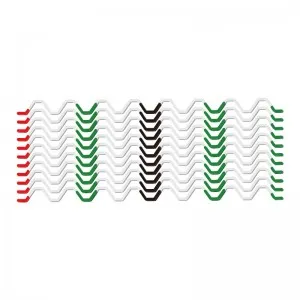
The second component is the spring wire, a piece of high-tensile steel wire bent into a zigzag or "wiggle" pattern. This wire is engineered to fit snugly inside the lock channel. The magic happens during installation. Once the greenhouse film is draped over the frame and pulled over the lock channel, the spring wire is pressed into the channel on top of the film. The wire's spring-like nature causes it to expand outwards, pressing the film against the inner walls of the channel. The zigzag shape creates multiple points of contact, generating immense friction along the entire length. This action locks the film firmly in place, not by piercing it, but by gripping it tightly. A single run can hold one or even multiple layers of material, such as a primary film layer and a secondary shade cloth, by using two separate spring wires in the same channel. The result is a continuous, uniform seal that is remarkably resistant to wind-induced flapping and pull-out forces.
Why Not Just Staples or Battens? A Lesson in Longevity and Tension
Before the advent of systems like the lock channel and spring wire, growers relied on more rudimentary methods. A common approach was the wooden batten system, where a thin strip of wood was placed over the film and nailed or screwed to the wooden greenhouse frame. Another method, particularly for hobbyist structures, involved simply using a staple gun. Why have these methods fallen out of favor for professional or serious applications?
The answer lies in the distribution of stress. Staples and screws create localized points of high stress. Each fastener pierces the film, creating a small hole that is a natural starting point for a tear. When the wind blows, it causes the film to flutter. This fluttering motion concentrates immense force on these tiny pierced points. Imagine a flag whipping in the wind; the fabric frays first at the points of attachment. In the same way, greenhouse film attached with staples will inevitably tear away from the fasteners, often in the first significant storm.
Wooden battens offer a slight improvement by distributing the force along a line. However, they still present problems. The wood can expand and contract with moisture, leading to uneven tension. The fasteners are still point-based, and the wood itself can have splinters or rough edges that abrade the film over time. Furthermore, both staples and battens make replacing the film a labor-intensive chore, requiring the removal of countless fasteners and often resulting in damage to the frame.
The lock channel and spring wire system overcomes these deficiencies. By creating a continuous grip, it distributes wind load evenly across the entire perimeter. There are no punctures. The smooth surfaces of the channel and the often PVC-coated wire are gentle on the film. The system allows for easy removal and re-installation, making seasonal replacement of film or the addition of shade cloth a simple task. It is, in essence, a shift from a "puncturing" to a "gripping" philosophy, a change that has dramatically increased the reliability and lifespan of hoop house coverings.
The Impact on Your Greenhouse Environment and Crop Health
A securely fastened covering is not merely a structural concern; it is a horticultural necessity. The primary function of a greenhouse is to create a controlled, modified environment that is more favorable for plant growth than the outside world. This control is entirely dependent on the integrity of the structure's seal.
A film that is loose or has gaps allows for massive air leakage. During a cold Russian winter, this means precious heat escapes, causing heating systems to run constantly at great expense and creating cold spots that can stunt or kill plants. In a hot, humid climate like Southeast Asia, it means hot air infiltrates the structure, making cooling efforts futile and promoting fungal diseases. Uncontrolled air exchange makes it impossible to maintain consistent temperature and humidity levels, which are foundational to healthy plant development and a high-yield harvest.
Moreover, gaps in the covering are open doors for pests. Insects and other small animals can easily enter through a torn or poorly sealed section of film, introducing a vector for disease and crop damage that can be difficult and costly to manage. The lock channel and spring wire system, when properly installed, creates an almost hermetic seal. It stops uncontrolled air exchange, allowing for precise management of the internal climate. It presents a physical barrier to pests. By ensuring the greenhouse film is taut and fully intact, this fastening system becomes a silent guardian of your crops, protecting them not just from wind and rain, but from the subtle environmental fluctuations and biological threats that can undermine a grower's efforts. The investment in a quality fastening system is therefore an investment in the very productivity and profitability of the greenhouse operation.
Choosing Wisely: Selecting Materials for Your Climate and Goals
The decision-making process for a lock channel and spring wire system does not end with choosing the system itself. The specific materials from which the components are made will dictate their performance, lifespan, and suitability for your particular environment. A grower in the coastal, salty air of South Africa will have different priorities than a grower facing the heavy snow loads of a temperate region. Understanding the properties of aluminum versus steel, and the nuances of different wire coatings, is the first step toward building a truly resilient and long-lasting hoop house.
The Great Debate: Aluminum vs. Galvanized Steel Lock Channels
The lock channel, as the foundation of the system, must be robust and durable. The two most common materials used for its construction are aluminum and galvanized steel. Each possesses a distinct set of characteristics that makes it more or less suitable for certain applications. Thinking about your local conditions is paramount.
| Feature | Aluminum Lock Channel | Galvanized Steel Lock Channel |
|---|---|---|
| Corrosion Resistance | Excellent. Aluminum naturally forms a protective oxide layer, making it ideal for high-humidity, coastal, and salty environments. It will not rust. | Good, but finite. The zinc coating (galvanization) sacrificially corrodes to protect the steel. Scratches or cut ends can become rust points. Lifespan is shorter in wet or salty conditions. |
| Strength & Rigidity | Good. It is sufficiently strong for most applications, but more flexible than steel. It can be bent to follow the curves of a hoop house arch more easily. | Excellent. Steel is stronger and more rigid, offering superior resistance to bending or deformation under heavy load, such as from high winds or snow. |
| Weight | Very light. Its low weight makes it easier to handle and install, especially when working overhead or on long sections. | Heavy. Steel is significantly denser and heavier, which can make installation more physically demanding. |
| Cost | Higher initial cost. Aluminum is generally a more expensive raw material compared to steel. | Lower initial cost. Galvanized steel is typically the more budget-friendly option, making it popular for large-scale projects where cost is a primary driver. |
| Thermal Conductivity | High. Aluminum transfers heat quickly, which can create hot spots on the greenhouse film on a sunny day, potentially accelerating film degradation at the point of contact. | Lower. Steel transfers heat more slowly than aluminum, reducing the risk of creating damaging hot spots on the plastic film. |
So, how does one choose? An empathetic approach, putting yourself in the shoes of the material, can be helpful. Imagine you are the lock channel. If you are placed on a hoop house in a humid coastal region of Brazil, you would want to be aluminum. The constant moisture and salt in the air would relentlessly attack a steel channel's zinc coating, but as aluminum, you would remain unblemished. Conversely, if you were installed on a structure in a region with heavy snowfall, you might prefer to be steel. Your inherent rigidity would provide the necessary backbone to resist being crushed or deformed by the weight.
For many growers in the Middle East, where intense sun and heat are the main challenges, the lower thermal conductivity of steel might be an advantage, though the superior corrosion resistance of aluminum is also a powerful argument, especially if evaporative cooling systems are used. For a DIY builder or someone working alone, the light weight of aluminum is a significant practical benefit. Ultimately, the choice is a balance of longevity, strength, and budget, all viewed through the lens of your local environment.
Deconstructing Spring Wire: Coatings, Gauge, and Lifespan
The spring wire is the active component of the system, the part that does the "wiggling" and locking. While it may seem like a simple piece of bent metal, its design and composition are highly consequential. The quality of the wire directly affects the security of the grip and the health of your greenhouse film.
The wire itself is almost always a high-carbon, high-tensile spring steel, chosen for its ability to flex during installation and then retain its shape and outward pressure over many years. The primary differentiators are its protective coating and its diameter, or gauge.
| Wire Type | Description | Advantages | Disadvantages | Best For |
|---|---|---|---|---|
| Plain Galvanized | Standard spring steel with a zinc coating for rust prevention. | Lowest cost. | The zinc coating can be abrasive to the film. Rust can still occur over time, staining the film and weakening the wire. | Budget-conscious projects in dry, mild climates. |
| PVC Coated | Galvanized spring steel wire that is subsequently coated in a layer of flexible, UV-stabilized PVC plastic. | Provides a smooth, friction-reducing surface that is gentle on the film. The coating acts as a second barrier against rust. It reduces heat transfer from the metal to the film. Longer lifespan. | Higher initial cost than plain galvanized wire. | All climates, especially those with high UV, extreme temperatures, or humidity. It is the professional standard for maximizing film life. |
The PVC coating is a particularly thoughtful innovation. Imagine the greenhouse film on a scorching hot day. A bare metal wire, heated by the sun, can press against the film and cause it to stretch, weaken, and prematurely degrade. The PVC coating acts as an insulator, protecting the film from this focused thermal stress. It also creates a smoother surface, which is vital. When you are pulling a 6-mil polyethylene sheet taut, the last thing you want is to drag it over a rough, abrasive surface that could cause a micro-tear. The smooth PVC coating allows the film to slide into place without damage. For more information, a practical buyer's guide can offer deeper insights into these material choices.
The wire's gauge (diameter) also matters. A thicker wire (e.g., 2.3mm vs 2.0mm) will generally exert more outward force, providing a more secure grip, which is advantageous in high-wind locations. It is also more durable and less prone to being permanently bent or deformed after multiple uses. While the cost difference is often minimal, opting for a high-quality, PVC-coated, heavier-gauge wire is one of the most cost-effective ways to ensure the long-term security of your hoop house covering.
The Groundwork: Meticulous Preparation of the Hoop House Frame
The success of a lock channel and spring wire installation is determined long before the first piece of plastic is unrolled. Just as a painter prepares a canvas, a grower must prepare the hoop house frame. This preparatory stage is an act of foresight, aimed at creating a perfect foundation for the covering system. Skipping these steps is to invite friction, abrasion, and premature failure. The goal is to create a smooth, contiguous, and structurally sound surface onto which the lock channel will be mounted. Every moment spent in preparation is repaid tenfold in the longevity of the greenhouse film and the peace of mind that comes with a secure structure.
Ensuring a Smooth and Safe Surface
Greenhouse film, for all its resilience, has an Achilles' heel: sharp edges. A tiny metal burr, a sharp corner on a bracket, or a rough weld seam can act like a knife, slicing or abrading the film under the tension of wind and weather. Before any channels are installed, one must undertake a tactile survey of the entire frame where the channels will lie. Run a gloved hand along every piece of steel or aluminum tubing, every joint, and every bracket.
If any sharp points, weld splatter, or burrs are found, they must be eliminated. A metal file or a grinder with a flap disc is the tool for this job. The objective is not just to knock off the point, but to round and smooth the area so it poses no threat. Think of it as a form of structural empathy; you are feeling the frame from the perspective of the delicate film that will soon be stretched over it.
In addition to removing sharp points, it is wise to apply a protective barrier in certain areas. Greenhouse felt tape, a UV-stabilized polyester tape, is an excellent material for this. It should be applied over any welds, joints, or areas where different frame components meet. It serves as a physical cushion, separating the film from the hard, potentially abrasive metal. It also acts as a thermal break. On a hot day, the metal frame can become extremely hot. This heat can be conducted directly to the film, causing it to degrade. The felt tape provides a layer of insulation, moderating the temperature at these critical points of contact. It is a small, inexpensive step that pays huge dividends in extending the life of your covering.
Mapping Your Channel Layout: Baseboards, Hip Boards, and End Walls
Before drilling the first hole, it is vital to have a clear plan for where every piece of lock channel will go. The goal is to create a completely enclosed perimeter for every surface that will be covered. Walk around your structure and visualize the path of the channel.
- Baseboards: Lock channel should run continuously along the base of the hoop house on all sides. It is often attached to a wooden or metal baseboard that is secured to the ground posts. This is the foundation of your seal.
- End Walls: The arches of the end walls require a continuous run of lock channel. This is where the ability to bend the channel to a curve becomes important. The channel will outline the door frames and any ventilation openings.
- Roll-Up Sides: For greenhouses with roll-up side ventilation, lock channel is installed on a "hip board." This board is a horizontal frame member running the length of the structure, positioned at the height where you want the roll-up side to end. The main roof plastic will be secured in this channel. The separate roll-up side plastic will be attached to the roll bar at the bottom and often secured with a different method or simply allowed to hang. The hip board channel is what creates the seal between the fixed roof and the movable side wall.
- Ridge: While not always necessary, some designs may incorporate a lock channel at the very peak or ridge of the greenhouse, especially on wider, gutter-connected structures.
Creating this map in your mind or on a simple drawing ensures you have enough material and a clear sequence of operations. It helps prevent a scenario where you have secured three sides of a plastic sheet only to realize you have nowhere to attach the fourth. It is a mental blueprint for a windproof and waterproof enclosure.
Tool and Material Checklist: Gathering Everything Before You Begin
There is little more frustrating than being halfway through a project, perhaps perched on a ladder, only to discover you are missing a necessary tool or component. A professional approach demands that all materials be gathered and checked before the work commences. A typical checklist for installing the lock channel and film would include:
-
Materials:
- Lock Channel (Aluminum or Steel)
- Spring Wire (PVC-coated recommended)
- Greenhouse Film (Correct size for your structure)
- Self-Tapping Screws (Appropriate type and length for your frame material)
- Greenhouse Felt Tape (Optional but highly recommended)
-
Tools:
- Cordless Drill with Magnetic Bit Holder (A clutch on the drill is useful to avoid over-tightening screws)
- Metal File or Grinder
- Measuring Tape
- Marker or Pencil
- Ladders or Scaffolding
- Utility Knife with fresh blades
- Gloves and Safety Glasses
Having everything organized and at hand transforms the process from a chaotic scramble into a smooth, efficient workflow. It allows you to focus on the quality of the installation rather than searching for a misplaced drill bit. This disciplined preparation is the hallmark of an experienced builder and the foundation of a successful outcome.
The Art of Installation: Attaching the Lock Channel
With the frame prepared and all materials at hand, the process of attaching the lock channel begins. This phase is about precision and consistency. The channel is the skeleton of your fastening system; if it is weak or poorly aligned, the entire system will be compromised. Each screw, each joint, and each curve contributes to the final strength of the seal. This is not a step to be rushed. It is methodical work that demands attention to detail, transforming the bare frame into a structure ready to receive its skin.
Establishing a Straight and Level Foundation: The Baseboard Channels
The installation should always begin with the baseboards. These are the long, straight runs at the bottom of the hoop house. Attaching the lock channel here first establishes a reference line for the rest of the installation.
Start at one corner. Place the first piece of lock channel against the baseboard, ensuring it is straight and properly aligned. The open side of the "U" or "C" channel should typically face outwards or upwards, in the direction that is most convenient for inserting the spring wire later. Using a cordless drill, drive a self-tapping screw through the pre-drilled hole in the channel (if available) or directly through the back of the channel into the frame.
When connecting two pieces of channel end-to-end, they should be butted together as tightly as possible to create a nearly seamless track. A small gap of 1/8 inch (3-4 mm) is acceptable to allow for thermal expansion, but larger gaps can create a weak spot or snag the film. Some installers prefer to slightly ream the inside edge of the cut ends to remove any burrs that could damage the wire or film. Continue this process, attaching the channels along the entire length of the baseboard on all sides of the structure. Maintaining a straight, consistent line is key.
Bending Channels to Fit Your Hoops: Techniques for a Perfect Curve
Attaching the channel to the curved end-wall bows is one of the more technique-sensitive parts of the job. The goal is to create a smooth, even curve that precisely follows the contour of the frame, without kinking or deforming the channel.
Aluminum channel is the preferred choice for curves due to its flexibility. The most effective technique is to "pre-bend" the channel before attaching it. Lay the channel on the ground and place your foot in the middle. Gently pull up on both ends to introduce a slight curve. Move your foot and repeat, slowly working a curve into the entire length. Do not try to create the full bend in one go. It is a gradual process.
Once it has a rough curve, you can begin attaching it to the end bow, starting from the center (the peak of the arch) and working your way down both sides. As you attach it, the act of screwing it to the frame will help to form the final, precise curve. Place a screw, then gently press the next section of channel against the bow and place the next screw. The channel should conform to the bow without being forced.
For galvanized steel channels, which are much more rigid, bending on-site is difficult. It is far better to order pre-bent channels from a supplier like a leading provider of greenhouse components who can manufacture them to the exact radius of your hoops. Attempting to bend a rigid steel channel without the proper equipment will almost certainly result in kinking, which destroys the integrity of the channel and creates a point where the spring wire will not lock correctly.
Screw Spacing and Type: A Detail That Defines Strength
The choice of screw and the spacing between them are not minor details; they are fundamental to the strength of the system. The screws are what transfer the load from the lock channel to the main frame of the greenhouse.
-
Screw Type: Self-tapping screws are the standard. For attaching to a metal frame, self-tapping screws with a drill-point tip are ideal, as they drill their own pilot hole. The screw material should be compatible with the frame to avoid galvanic corrosion; coated or stainless steel screws are a good choice. The length must be sufficient to get a secure purchase in the frame material without being so long that the tip protrudes and creates a hazard or a snag point for the film.
-
Screw Spacing: A common recommendation is to place a screw every 18 to 24 inches (45 to 60 cm) along the straight runs of the channel. However, in areas known for high winds, it is prudent to decrease this spacing to every 12 inches (30 cm). On curved sections, the screws may need to be placed closer together to ensure the channel follows the curve smoothly. A screw should always be placed within a few inches of each end of every channel piece.
Think of each screw as a stitch holding the system together. Too few stitches, and the seam will tear apart under stress. By using the correct type of screw and appropriate spacing, you are ensuring that the immense forces exerted by wind on the large surface area of the film are safely and effectively transferred from the film, to the wire, to the channel, to the screws, and finally into the strong, grounded frame of the hoop house.
The Main Event: Draping and Positioning the Greenhouse Film
After the methodical work of preparing the frame and installing the lock channel, the moment arrives to introduce the greenhouse film. This stage transforms the bare skeleton into an enclosed space. It is a process that is part science, part art, and greatly influenced by the weather. The goal is to cover the structure with the film, ensuring it is centered, correctly oriented, and has just the right amount of slack to allow for tensioning. Success here depends on patience, teamwork, and an understanding of how the polyethylene material behaves.
Choosing the Right Day for Installation: The Wisdom of Patience
The single most important factor for a successful film installation is the weather. Attempting to install a large sheet of greenhouse plastic on a windy day is a recipe for frustration and failure. A 2,000-square-foot sheet of plastic becomes an uncontrollable sail in even a moderate breeze, making it impossible to position and dangerous for the installation crew. The ideal day for pulling plastic is calm, with little to no wind.
Temperature also plays a role. Polyethylene film expands when warm and contracts when cool. If you install the film and pull it drum-tight on a very hot, sunny day, it will contract as the temperature drops overnight. This contraction can put immense stress on the film and the lock channel system, potentially causing the wire to pop out or even tearing the film. Conversely, if you install it on a very cold day, it will become loose and sag when the weather warms up.
The perfect condition is a calm, overcast, mildly temperate day. This allows you to position the film easily and achieve a tension that will remain relatively stable through normal temperature fluctuations. If you must install on a sunny day, aim for early morning or late evening when the temperature is moderate. Resisting the urge to push ahead in poor conditions is a mark of experience. Waiting for the right day is not a delay; it is a critical part of the process.
The "Center-Out" Method for a Wrinkle-Free Finish
A smooth, wrinkle-free film is not just aesthetically pleasing; it is also structurally superior. Wrinkles can collect water, create shadows, and are points where the film can flap and abrade against the frame. The "center-out" method is the professional standard for achieving a taut, even finish.
-
Unroll and Position: With a team of people (two is the minimum, more is better for large structures), carefully unroll the film along one side of the hoop house. Identify the center of the film and a corresponding center point on the greenhouse structure (e.g., the center hoop).
-
Pull Over the Top: Using ropes attached to the corners or simply by hand, gently pull the film up and over the ridge of the hoop house. The goal is to drape it over the structure, ensuring it has roughly equal amounts of overhang on all sides.
-
Find the Center: Adjust the sheet so that it is centered both lengthwise and widthwise. You should have a similar amount of excess film hanging down past the baseboards on both sides, and past the end walls on both ends.
-
Make the First Attachment: The first point of attachment should be at the center of one of the end-wall arches. Secure a few feet of film in the lock channel at the very peak of the arch using a piece of spring wire. This acts as a central anchor.
-
Work Outwards: From this central anchor point, work outwards and downwards, securing the film in the lock channels. The pattern should be one of working from the center to the edges. For example, after anchoring the top-center, you might move to the center of one of the baseboards. Then, work your way from the center of the baseboard out towards the corners. This method gently pulls the slack out of the film, smoothing out wrinkles as you go, rather than trapping them in the middle.
Managing Single vs. Double Layers of Poly
Many commercial and cold-climate hoop houses utilize a double layer of polyethylene film. A small inflation fan is used to pump air between the two layers, creating an insulating air gap that can significantly reduce heating costs. Installing a double layer requires a slight modification of the technique.
The two layers of film are typically pulled over the structure together as a single unit. It is vital to ensure they are oriented correctly. Many greenhouse films have a designated "inside" and "outside." The outside is treated for maximum UV resistance, while the inside may have an anti-condensate coating that prevents water droplets from forming and dripping on plants. When using two layers, both sheets should have their "inside" surfaces facing inwards, towards the center of the air gap. The manufacturer's printing on the film will indicate the correct orientation.
When it comes to securing the film in the lock channel, both layers are treated as one. They are placed in the channel together, and a single spring wire is used to lock them both in place. The spring wire and channel system is strong enough to securely hold two layers of standard 6-mil film. This double-layer installation, combined with an inflation kit, is a hallmark of a four-season, energy-efficient greenhouse.
Mastering the "Wiggle": Securing the Film with Spring Wire
This is the climactic moment of the installation process. The film is draped, the channels are waiting, and the spring wire is ready. The physical act of inserting the wire is what brings the whole system to life, locking the film in place and beginning the tensioning process. While the motion is simple, a correct technique is what separates a secure, long-lasting installation from one that is prone to failure. This step is about feel and rhythm, transforming potential energy stored in the spring wire into a powerful, static grip on the covering.
The Correct "Wiggling" Technique: An Angle for Success
The name "wiggle wire" is descriptive. The most effective way to insert the wire is not to push it straight down into the channel. Doing so requires immense force and can risk damaging the film. The proper technique involves a side-to-side "wiggling" motion.
-
Start at an Angle: Begin at one end of the channel. Hold the spring wire so that it is angled slightly, not perpendicular to the channel.
-
Push and Wiggle: Push the leading edge of the wire into the channel. As you push forward along the length of the channel, simultaneously move your hand back and forth in a short, wiggling motion. This action causes the zigzagging wire to "walk" its way into the channel, seating itself over the film. The motion should be fluid. One side of a wire "peak" goes in, then the other.
-
Feel the Lock: As the wire seats correctly, you will feel and often hear a satisfying click or snap as it settles into the channel. It should feel secure and require significant effort to pull back out. If it feels loose, it may not be seated properly. Remove it and try again.
This technique uses leverage and the wire's own shape to do the work, requiring far less brute force. It is also gentler on the film, as you are not creating a high-pressure point by trying to force the wire straight in. For a visual demonstration, many suppliers, such as Wigglewires.com, provide videos that clearly illustrate this wiggling motion.
Anchoring Corners and High-Stress Areas First
The sequence in which you install the wire is crucial for achieving even tension. As described in the "center-out" method, you are progressively stretching the film. A good general sequence is to anchor the key stress points first.
- Initial Anchors: Start with the initial center anchors on the end walls and perhaps the center of the long side walls.
- Corners: The corners of the greenhouse are high-stress areas. After the initial anchors are in, move to the corners. Pull the film taut diagonally and secure it in the corner sections of the lock channel. Securing the corners helps to define the overall shape and tension of the main surfaces.
- Fill in the Gaps: Once the center points and the corners are locked in, go back and fill in the long, straight sections in between. As you work along a baseboard, for example, you can gently pull the film downwards and outwards to remove any remaining wrinkles before wiggling the wire into place.
This sequence ensures that tension is applied evenly across the sheet, preventing the formation of large wrinkles or areas of sag. It is a systematic process of pulling the film taut and locking that tension in place, section by section.
Layering Materials: How to Secure Film and Shade Cloth Together
One of the great advantages of the lock channel and spring wire system is its ability to hold multiple layers. This is commonly used to add a layer of shade cloth over the primary greenhouse film during hot summer months. The process is remarkably simple and does not require disturbing the main film.
Let's say your 6-mil polyethylene film is already installed and secured with one spring wire. To add shade cloth:
- Drape the Shade Cloth: Pull the shade cloth over the structure, on top of the existing poly film.
- Insert a Second Wire: Position the edge of the shade cloth over the same lock channel that is holding the poly film.
- Wiggle It In: Take a second, separate piece of spring wire and, using the same wiggling technique, insert it into the channel alongside the first wire.
The channel is designed with enough space to accommodate two spring wires and the multiple layers of material. The second wire will lock the shade cloth in place without affecting the first wire or the seal on the primary greenhouse film. At the end of the season, the shade cloth can be removed by simply pulling out the second wire, leaving the main covering untouched. This versatility makes it easy to adapt the greenhouse to changing seasons and crop requirements, a feat that is difficult or impossible with older fastening methods.
Final Touches: Inspection, Tensioning, and Long-Term Care
The installation of the lock channel and spring wire for hoop houses is not truly complete when the last wire is wiggled into place. The final phase involves a critical inspection, fine-tuning the film tension, and establishing a mindset of proactive maintenance. These concluding actions ensure the system performs optimally from day one and continues to protect your investment for years to come. This is the stage where craftsmanship is confirmed and the foundation for a long, reliable service life is laid.
The "Tap Test": Assessing and Adjusting Film Tension
Once the film is secured in all the channels, the next step is to assess its tension. The ideal tension is "drum-tight." The film should be taut enough that it does not sag or flap, but not so tight that it is under extreme stress.
A simple, effective way to check the tension is the "tap test." Tap the surface of the film with your fingers. It should produce a low, resonant, drum-like sound. It should feel tight and responsive, with very little give. If you tap it and it feels loose or produces a flaccid "thud," it needs to be tightened.
To tighten a section, you must remove the spring wire from that area. Pull gently but firmly on the edge of the film to remove the slack, and then reinstall the spring wire to lock in the new, higher tension. This is an iterative process. You may need to adjust several sections to achieve a uniform, drum-tight surface across the entire structure. It is better to have the film slightly too loose than excessively tight. An overtightened film has no give and is more susceptible to tearing or damage from hail, while a slightly loose film can be re-tensioned later.
Trimming Excess Film: The Finishing Touch
After the final tensioning, you will be left with excess film hanging down from the lock channels. This should be trimmed for a clean appearance and to prevent practical problems. Excess film can collect water, flap in the wind, and provide a habitat for pests.
Using a sharp utility knife, carefully trim the excess film. A good practice is to leave about 2-3 inches (5-8 cm) of film extending beyond the lock channel. Do not cut the film flush with the channel. This small flap of extra material provides some insurance. If the film were to ever pull slightly in the channel, this flap ensures a seal is maintained. It also provides something to grip if you ever need to remove and re-tension the film. Make a clean, straight cut along the entire perimeter of the greenhouse.
A Seasonal Checklist: Inspecting Your System for Wear and Tear
A lock channel and spring wire system is low-maintenance, but not zero-maintenance. Regular inspection is the key to catching small problems before they become catastrophic failures. A simple walkthrough, perhaps once at the beginning of each season and always after a major storm, can save you from a costly emergency repair.
- Check the Wires: Look for any sections of spring wire that may have popped out of the channel, especially in corners or on the windward side of the structure. If a wire is out, the film is not secure. Reinsert it immediately.
- Inspect the Film at the Channel: Look closely at the film where it enters the lock channel. Check for any signs of abrasion, tearing, or discoloration that might indicate excessive heat or friction.
- Examine the Channels and Screws: Look for any signs of rust on steel channels, particularly at cut ends or scratches. Check for any screws that may have loosened over time and tighten them as needed. s Assess Overall Tension: Perform the tap test again. Over time, the film can stretch slightly. If it has become noticeably loose, it may be time to re-tension it to prevent wind flap, which is a primary cause of film failure.
By treating the fastening system as a dynamic component of your greenhouse that requires occasional attention, you extend its life and the life of the covering it protects. This proactive stewardship ensures the hoop house remains a secure, stable, and productive environment for your crops, season after season.
Frequently Asked Questions
Can I reuse spring wire (wiggle wire)?
Yes, high-quality spring wire is designed to be reusable. PVC-coated, heavier-gauge wires are particularly durable and can typically be removed and reinstalled many times over several years without losing their spring tension. Lower-quality, plain galvanized wires may become bent or lose their shape more easily and may need to be replaced more frequently.
How do I connect two pieces of lock channel end-to-end?
To connect two pieces of lock channel, simply butt them up against each other as closely as possible. Ensure they are aligned to create a straight, continuous track. A very small gap (around 1/8 inch or 3 mm) is acceptable for thermal expansion. Make sure to place a mounting screw within 2-3 inches of the joint on both pieces of channel for maximum strength.
My spring wire keeps popping out in high winds. What am I doing wrong?
This issue usually stems from one of three causes. First, the film may not be tensioned properly and is too loose, allowing wind to get underneath it and create enough force to push the wire out. Second, the wire may not have been installed correctly with the "wiggling" motion, so it is not fully seated in the channel. Third, your screw spacing on the lock channel may be too far apart, allowing the channel to flex under wind load. Try re-tensioning the film, reinstalling the wire correctly, and consider adding more screws to the channel in the affected area.
Can I install two layers of material, like film and shade cloth, in the same channel?
Absolutely. One of the main benefits of this system is its ability to hold multiple layers. The standard procedure is to install the first layer (greenhouse film) with one spring wire. Then, place the second layer (shade cloth) over the top and secure it in the same channel using a second, separate spring wire.
What is the best way to repair a small tear in the film near the lock channel?
For small tears or punctures, the best solution is to use a specialized greenhouse repair tape. This is not ordinary tape; it is a UV-stabilized polyethylene tape with an aggressive acrylic adhesive. Clean the area around the tear thoroughly, ensure it is dry, and apply a piece of the repair tape to both the inside and outside of the film for a durable, weatherproof seal.
Conclusion
The integrity of a hoop house structure is not defined by its strongest arch or its thickest covering, but by the quality of the connection between them. The lock channel and spring wire system provides a method of attachment that is superior in its distribution of stress, its gentleness on the film, and its long-term reliability. By moving from point-based fasteners to a continuous grip, it mitigates the primary failure points of older systems. The selection of appropriate materials—aluminum for humid regions, steel for strength, and PVC-coated wire for film protection—is a nuanced decision that must be informed by local climate and operational goals. A successful, storm-proof seal is not the result of a single action, but the culmination of a series of deliberate steps: meticulous frame preparation, precise channel installation, patient film handling, and a correct "wiggling" technique. To invest in a quality lock channel and spring wire system, and in the knowledge to install it correctly, is to make a direct investment in the security of your crops, the energy efficiency of your operation, and the overall longevity of your greenhouse.
References
AgTec. (2025). Greenhouse supplies. AgTec. Retrieved January 1, 2025, from
Hortitech Direct. (2025). Greenhouse covering basics. Hortitech Direct. Retrieved January 1, 2025, from
Innogreenhouse. (2025). The world's leading greenhouse manufacturer. Shandong Northern Greenhouse Co., Ltd. Retrieved January 1, 2025, from
Skyplan Greenhouse Technology Co., Ltd. (2025). Greenhouse wiggle wire. Jiangsu Skyplan Greenhouse Technology Co., Ltd. Retrieved January 1, 2025, from
Wigglewires. (2024). Greenhouse construction materials and equipment supplier. Beijing Fenglong Hitech Co., Ltd. Retrieved November 1, 2024, from https://www.wigglewires.com/
Wigglewires. (2024). Wiggle wire channel category. Beijing Fenglong Hitech Co., Ltd. Retrieved December 1, 2024, from https://www.wigglewires.com/wiggle-wire-channel-category/
Wigglewires. (2025). Video. Beijing Fenglong Hitech Co., Ltd. Retrieved February 21, 2025, from https://www.wigglewires.com/video/